

Across Canada, land maintenance is closely tied to safety, access, and operational efficiency. Roadsides, ditches, field edges, utility corridors, and drainage banks all need regular cutting to control overgrowth and keep work areas accessible. For warehouse managers, equipment operators, logistics professionals, and industrial procurement teams, this may seem outside the core world of storage and transport. In practice, it is not. Vegetation control affects site access, fleet movement, drainage performance, and the safe condition of industrial property.
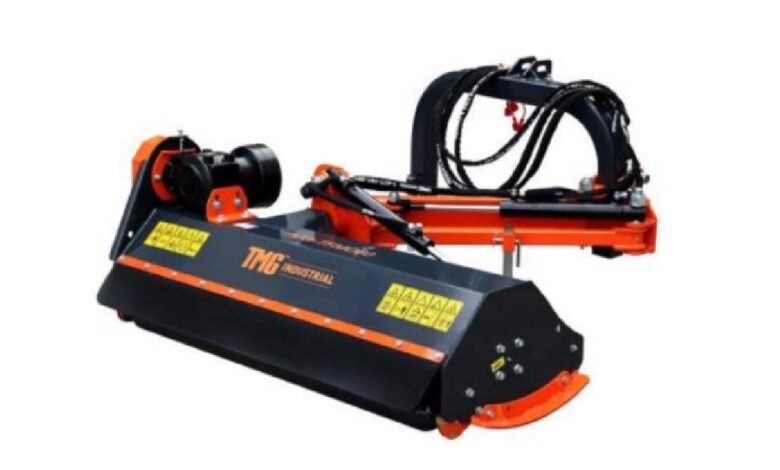
A Ditch Bank Flail Mower is designed for that kind of work. Unlike a standard mower that performs best on flat ground, this equipment is built to cut grass, weeds, and brush on uneven surfaces, slopes, and ditch lines. In Canadian conditions, where terrain and weather often create difficult maintenance zones, that makes it a practical tool for many operations.
Why This Equipment Matters in Canada
Canadian sites often include drainage channels, roadside margins, embankments, and overgrown edge areas that are hard to maintain with conventional cutting equipment. Heavy rain, spring runoff, and fast summer growth can quickly turn these areas into access and visibility problems. On industrial, municipal, and agricultural sites, poor vegetation control can increase the risk of blocked drainage, hidden obstacles, and reduced line of sight for vehicles and workers.
This is why ditch bank flail mowers are used in:
- Roadside and ditch maintenance
- Farm lane and pasture edge cutting
- Industrial yard perimeter control
- Utility and drainage corridor maintenance
How Ditch Bank Flail Mowers Work
Offset and Tilt for Difficult Ground
The main difference is reach and angle. A ditch bank flail mower mounts to a tractor and uses an offset arm and tilt function to cut areas that are below or beside the tractor path. This allows operators to maintain ditches, banks, and slopes without driving directly onto unstable ground.
Flail Cutting Action
Instead of one large spinning blade, a flail mower uses multiple hammer or knife elements attached to a rotating drum. This helps break down thick grass and weeds into smaller material and often leaves a more controlled finish on rough terrain.
Why Efficiency, Safety, and Productivity Matter
In real operations, vegetation control is not only about appearance. It supports drainage, access, fire risk reduction, and safer movement for vehicles and crews. When overgrowth is left unmanaged, the result can be slower maintenance work, hidden hazards, and greater wear on equipment operating in poorly maintained areas.
Better cutting equipment can support:
- Faster maintenance of long edge areas
- Reduced need for manual trimming
- Safer visibility near roads and work zones
- Improved control over seasonal overgrowth
Technical Basics and Capability Considerations
Buyers should review tractor compatibility, working width, offset range, tilt angle, hitch category, and drive requirements. In this equipment class, a model may be designed for tractors in the 30 to 60 horsepower range, with a working width of about 57 inches, Category 1 three-point hitch mounting, and a 540 revolutions per minute power take-off drive. Offset distance and tilt range are especially important because they determine how effectively the mower can reach ditches and sloped edges.
Factors That Affect Performance and Safety
Real-world results depend on more than machine size. Ground moisture, slope angle, vegetation density, operator skill, hydraulic condition, and cutting speed all affect performance. A mower that is technically suitable can still perform poorly if the tractor is undersized, the site is unstable, or maintenance is neglected.
Safety Best Practices, Equipment, and Limits
Safe use starts with matching the mower to the correct tractor and reading site conditions before work begins. Operators should inspect guards, belts, skid shoes, hydraulic lines, and the PTO shaft before use. People and vehicles should remain clear of the cutting zone, especially near roadsides or work yards.
- Use the correct tractor size and hitch setup
- Inspect the PTO shaft and guards before operation
- Avoid unstable banks and hidden obstacles
- Reduce speed in dense or uneven material
- Follow a routine maintenance schedule
Common related items include tractors, hydraulic connections, replacement flails, skid shoes, protective guards, and basic service tools. The main advantages are better reach, safer cutting from the tractor path, and more effective performance on rough ground. The limits include the need for correct tractor matching, operator training, and careful use on difficult terrain.
A Real-World Example and Final Takeaway
A practical example is a municipal or industrial property team using a TMG Industrial ditch bank flail mower to maintain roadside drainage channels and fence-line edges around a distribution yard. Instead of relying on slower manual trimming or less suitable flat-ground mowers, the team can cut from a safer position and cover more distance in less time.
In the years ahead, Canadian operations are likely to place more value on equipment that combines safety, reach, and efficient vegetation control. For sites that manage sloped ground, drainage lines, and rough margins, ditch bank flail mowers will continue to play an important role in keeping land usable, visible, and safer to operate.