

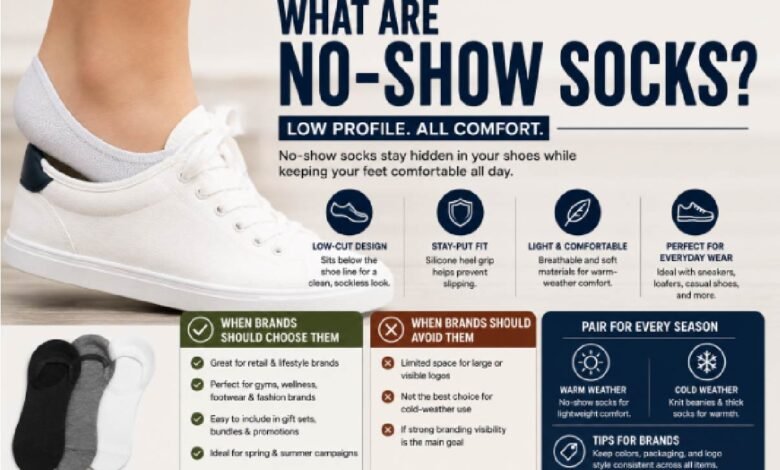
No-show socks are low-cut socks designed to stay hidden inside shoes. They are commonly worn with sneakers, loafers, casual shoes, and summer footwear. The goal is to give foot comfort without showing much sock above the shoe line.
For businesses, gyms, retail brands, and event organizers, no-show socks can be useful when the target customer wants a clean and minimal look. They are one of the common types of socks that buyers often compare with ankle socks, crew socks, and knee-high socks.
What Makes No-Show Socks Different?
No-show socks sit lower than ankle socks.
Low-Cut Shape
The sock is designed to sit below the shoe opening, creating a “sockless” look while still protecting the foot.
Heel Grip
Many no-show socks include silicone grips or elastic support to help prevent slipping.
Why Do Customers Like No-Show Socks?
No-show socks are popular because they are simple and discreet.
Clean Outfit Look
They work well when the wearer wants shoes to look clean without visible socks.
Warm-Weather Comfort
They are useful for spring and summer because they feel lighter than taller socks.
Are No-Show Socks Good for B2B Orders?
No-show socks can work well for certain business uses, but they are not the best option for every brand.
Good for Retail and Lifestyle Brands
Fashion stores, casual footwear brands, gyms, wellness brands, and lifestyle companies may use no-show socks as simple everyday merchandise.
Good for Light Promotional Products
Because they are small and practical, no-show socks can fit into gift sets, retail bundles, or customer thank-you packages.
When Should Brands Avoid No-Show Socks?
No-show socks have limited visible branding space.
Not Ideal for Strong Logo Visibility
If the goal is to show a large logo, crew socks or knee-high socks usually provide more design area.
Not Best for Cold Weather
For winter campaigns or outdoor workwear, taller and thicker socks may be more suitable.
How to Pair No-Show Socks with Other Accessories
No-show socks can be part of a broader product set. For example, a brand can offer low-cut socks for warmer months and custom beanies for colder seasons.
Use Seasonal Planning
Low socks fit warmer weather, while beanies and thicker socks fit fall and winter.
Keep Branding Consistent
Even if the logo is small, the colors and packaging should still match the brand style.
Final Thoughts
No-show socks are best for casual, warm-weather, and low-profile use. They are comfortable, simple, and easy to include in retail or promotional product plans.
For B2B buyers, the main question is whether visibility or wearability matters more. If the goal is subtle everyday use, no-show socks can be a good choice. If the goal is strong visible branding, taller socks may work better.