

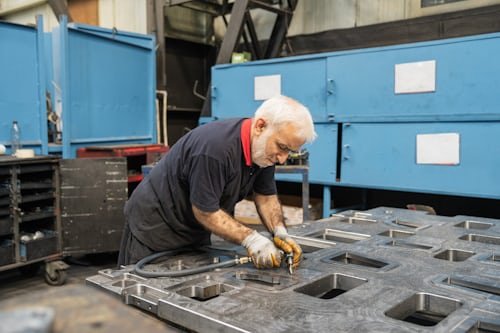
Injection molds are the heart of plastic manufacturing. They shape molten plastic into precise parts used in cars, phones, medical devices, and everyday products. Understanding the basic structure and components of injection molds helps engineers, technicians, and business owners make better decisions about production. This guide explains everything in simple terms.
What Are Injection Molds?
An injection mold is a tool made from strong metal that receives hot liquid plastic under high pressure and cools it into a solid part. The process is fast and can produce thousands of identical pieces. A good mold design directly affects product quality, production speed, and cost. Most injection molds are made of steel or aluminum and can last for hundreds of thousands of cycles when built correctly.
Basic Structure of an Injection Mold
Every injection mold has two main halves: the fixed half (cavity side) and the moving half (core side). These halves close tightly during injection and open to release the finished part. The mold sits in an injection molding machine that provides clamping force to keep the mold closed under high pressure.
The complete structure includes a mold base, guiding system, injection system, cooling system, ejection system, and venting channels. All these parts work together in a precise sequence that repeats every cycle.
The Mold Base
The mold base is the foundation that holds all other components. It consists of several plates stacked together. The top clamping plate connects to the machine, while the bottom clamping plate connects to the moving side. Support plates add strength to prevent bending under pressure.
Standard mold bases come in many sizes and follow industry standards, which makes replacement and repair easier. The mold base must be thick and rigid enough to handle the clamping force and injection pressure without flexing.
Cavities and Cores
The cavity and core are the most important shaping parts. The cavity is the negative space that forms the outer surface of the plastic part. The core forms the inner surfaces and details.
For simple parts, a mold may have one cavity. High-volume production often uses multi-cavity molds that produce several parts in one cycle. The cavity and core must fit together with very tight tolerances — sometimes as small as 0.01 mm — to avoid flash (extra plastic) on the finished parts.
These parts experience the highest wear because hot plastic flows across them at high speed and pressure. Manufacturers usually make them from high-quality tool steel and apply surface treatments to increase hardness and durability.
Sprue, Runners, and Gates
The injection system delivers molten plastic into the mold. It starts with the sprue, a tapered channel where the machine nozzle touches the mold. From the sprue, the plastic flows through runners — channels that distribute material to each cavity.
The gate is the small opening where plastic finally enters the cavity. Gate design is critical because it affects how the plastic fills the mold, how fast it cools, and the appearance of the final part. Common gate types include edge gates, pin gates, and submarine gates. The goal is to fill the cavity quickly and evenly without creating weak spots or visible marks.
Cooling System
Cooling is one of the most important parts of the molding process. About 70-80% of the cycle time is spent cooling the plastic so it becomes solid enough to eject. The cooling system consists of channels drilled through the mold plates and around the cavities and cores.
Water or sometimes oil flows through these channels to remove heat quickly and evenly. Proper cooling design prevents warping, sink marks, and long cycle times. Designers must balance cooling efficiency with the structural strength of the mold.
Ejection System
Once the plastic part cools, the mold opens and the ejection system pushes the part out. Ejector pins are the most common method. These pins sit behind the part and move forward when the mold opens. Other options include ejector plates, sleeves, and air ejection for delicate parts.
The ejection system must push the part smoothly and evenly to avoid damage or deformation. Return pins bring the ejector system back to its starting position when the mold closes for the next cycle.
Guiding and Alignment System
Guide pins and bushings keep the two mold halves perfectly aligned every time they close. These components are critical for maintaining tight tolerances and preventing wear on the cavity and core. Leader pins are usually longer and engage first to ensure proper alignment before the main mold surfaces touch.
Venting System
Air trapped inside the mold must escape when hot plastic rushes in. The venting system consists of small channels or gaps (usually 0.01 to 0.05 mm deep) at the edges of the cavity. Proper venting prevents burn marks, short shots, and air pockets in the finished parts. Designers place vents carefully so they do not cause flash.
How All Components Work Together
The full injection molding cycle follows these steps:
- The mold closes and clamps tightly.
- Molten plastic injects through the sprue, runners, and gates.
- The plastic fills the cavities while air escapes through vents.
- Cooling channels remove heat until the part solidifies.
- The mold opens.
- Ejector pins push the part out.
- The mold closes again for the next cycle.
Each component must perform its job at exactly the right time. Good synchronization leads to consistent quality and fast production.
Common Mold Types
Injection molds come in different designs. Two-plate molds are the simplest and most common. Three-plate molds add an extra plate for better gate placement. Hot runner molds keep the runners hot so there is no waste material, which saves plastic and shortens cycle times. Cold runner molds are cheaper but produce more waste.
Materials Used for Injection Molds
Most high-production molds use hardened tool steels like P20, H13, or 718. These steels handle heat and pressure well. Aluminum molds work for low-volume or prototype runs because they cost less and cool faster, but they wear out quicker. Surface coatings and texturing are often added to improve performance and part appearance.
For professional mold manufacturing and high-quality solutions, visit https://moldpartner.com/.
Basic Maintenance Practices
Good maintenance keeps molds running longer. Clean the mold after every production run. Check and lubricate guide pins and moving parts regularly. Watch for signs of wear on cavities, cores, and ejector pins. Store molds properly with protection against rust when not in use. Many companies schedule preventive maintenance after a certain number of cycles.
Conclusion
The basic structure and components of injection molds work together as a precise system to produce high-quality plastic parts quickly and consistently. From the strong mold base and shaping cavity-core set to the cooling, ejection, and venting systems, every part has an important job.
Understanding these components helps you communicate better with mold makers, troubleshoot production issues, and make smarter decisions about your plastic manufacturing needs. Whether you are new to injection molding or looking to improve your current process, knowing the fundamentals gives you a strong foundation.
A well-designed and properly maintained mold delivers reliable performance for many years. Investing time to understand mold structure pays off through better part quality, faster cycles, and lower long-term costs.