

Feeling low is not just “a phase”; it is a weight that shows up in late‑night overthinking, creative burnout, and that numb scroll through social media that never really helps. In moments like these, gentle structure, small routines, and the right kind of sound can make the day feel a little more manageable. That is where Musick AI comes in: a focused AI Music Generator built to turn short text prompts into emotionally tuned songs that match how someone feels—or wants to feel—right now. By asking for specific moods, genres, and instruments, listeners can shape music that cushions their emotions instead of fighting them.
I. Why Sound Can Soothe When Nothing Else Works
The Emotional Role of Personalized Music
- Music that is shaped around a person’s own words and preferences tends to feel more “seen” than generic playlists.
- With Musick AI, the listener can describe mood, genre, and style in plain language, so the generated track aligns closely with current emotions—sadness, tension, quiet hope, or calm focus.
From Noise to Sonic Safety Blanket
- Instead of random background noise, targeted music can become a “safety blanket”: something predictable, comforting, and tailored to a person’s emotional needs.
- Because tracks can be generated on demand, users can build small rituals—like a “morning reset track” or a “post‑meeting unwind track”—that give their day a sense of stability.
II. Getting Started: Turning Feelings Into Prompts
Understanding the Core Generator
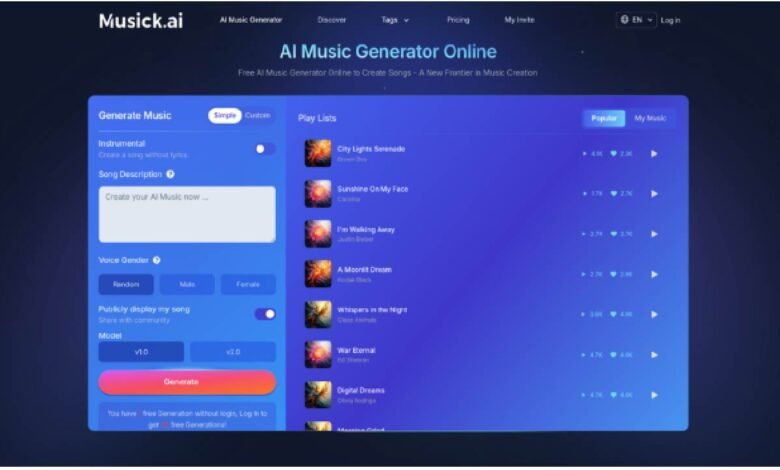
- On Musick AI, the main generator lets users choose between creating a song with vocals or an instrumental version “without lyrics.”
- The interface invites a description such as “acoustic pop about the holidays” and encourages genres and vibes instead of specific artists, which helps the system build original music rather than imitations.
How to Write Prompts That Actually Help Your Mood
To use an AI Music Maker like Musick AI as a mood tool, the most important step is prompt design. A simple framework:
- Emotion: “uplifting yet gentle,” “soothing and slow,” “melancholic but hopeful.”
- Genre: pop, jazz, lo‑fi, hip‑hop, classical, EDM, and more.
- Instruments: bright synths, piano, saxophone, acoustic guitar, strings, or “minimal percussion.”
- Context: “for late‑night study,” “for calming anxiety before sleep,” or “for a quiet walk after work.”
An example prompt: “Create an uplifting, energetic pop track with a catchy melody and upbeat rhythm. The song should feature bright synths, dynamic percussion, and a lively bassline. The mood should be positive and inspiring, perfect for a feel‑good summer anthem.”
III. Exploring Genres to Match Different Kinds of Unhappiness
Genre as Emotional Medicine Cabinet
Musick AI offers a “music plaza” where listeners can choose from genres such as EDM, R&B, jazz, pop, rap, metal, rock and roll, hip‑hop, blues, reggae, K‑pop, classical, disco, country, and more. Thinking of genres as tools rather than labels makes them easier to use:
- Gentle focus: jazz, classical, soft pop, lo‑fi‑style prompts.
- Anger or frustration: rock, metal, intense EDM with strong percussion.
- Low motivation: upbeat pop, funk‑style prompts, or bright EDM.
Therapeutic Use Cases on Musick
The site highlights an “AI Music Generator for Therapy,” encouraging users to select favorites, add them to a repository, and then “use it to cure unhappiness.” For someone dealing with emotional overload, this means:
- Saving the tracks that actually feel comforting into a personal library.
- Returning to them whenever anxiety spikes, turning listening into a repeatable coping tool.
IV. Using Musick as a Practical Mood Toolkit
Building Small, Repeatable Routines
Musick AI can become a practical tool in daily emotional hygiene by tying music to specific situations.
Useful examples:
- Pre‑sleep wind‑down: generate slow instrumental tracks with soft synths or piano, low percussion, and warm chords.
- Commute calming: create medium‑tempo tracks that are steady and predictable, avoiding sudden drops or intense builds.
- Study or deep work: ask for minimal lyrics or instrumental only, and focus on stable rhythm to reduce distraction.
Because the service can create royalty‑free tracks that work well with content, users who make videos, podcasts, or lessons can use the same comforting sound both in their projects and daily life, creating a consistent emotional environment.
Turning Ideas Into Complete Songs
Beyond mood loops, Musick AI can generate full songs from short descriptions and optional lyrics, making it useful for people who want to express feelings creatively but lack formal musical training. This creative outlet can itself ease unhappiness by turning difficult emotions into structured art.
V. Extra Tools: Lyrics, Beats, and Rap as Emotional Outlets
AI Song Lyrics Generator
In addition to music generation, Musick AI provides an AI Song Lyrics Generator where users can input genres and get structured lyrical ideas. For someone struggling to articulate feelings, this can:
- Offer a starting point for writing about sadness, burnout, or stress.
- Turn scattered thoughts into verses and choruses that feel more manageable.
AI Beat Producer and Rap Generator
The site also offers an AI Beat producer and AI Rap Generator, allowing users to write melody notes, design music sheets or playlists, and select genres. For people who process emotions through rhythm or spoken word:
- Beat‑driven tracks can be used to channel restlessness, pacing, or agitation into movement or freestyle practice.
- Rap generation can help someone “speak” uncomfortable feelings indirectly through stylized lyrics.
These tools collectively make Musick AI function not just as an AI Song Maker but as a flexible emotional expression studio.
VI. Using Musick Safely for Public And Private Life
For Content Creators, Students, and Professionals
Music generated through Musick AI is designed for broad practical use, including social media, video sharing sites, and learning environments where copyright and licensing matter. For users, this means a track that helps regulate mood in private can also be safely used in:
- Study videos, vlogs, or short films.
- Classroom materials, training content, or business presentations.
This creates a form of emotional continuity: the same supportive track can follow a creator from their editing desk to their published work.
Data, Consent, and Emotional Safety
The library is described as being built with full consent and careful attention to copyright, and users are invited to review privacy and legal documentation. For someone using music during vulnerable moments, this matters: there is reassurance that the soundscape used to cope with unhappiness is ethically sourced and safe to keep in long‑term projects.
VII. Practical Steps: One Week of “Sonic Safety Blanket” Habits
Day‑By‑Day Emotional Use Plan
To turn Musick AI into a genuine “sonic safety blanket,” it helps to think in terms of small, concrete habits rather than vague intentions.
A simple 7‑day structure:
- Day 1: Create one calming instrumental track for bedtime using soft genres such as jazz, classical, or gentle pop.
- Day 2: Generate an energizing track for morning routines—upbeat pop or EDM‑style prompt with a positive mood.
- Day 3: Make a “focus loop” track for study or work, with minimal vocals and a steady rhythm.
- Day 4: Use the lyrics tool to turn one difficult emotion into a verse and chorus.
- Day 5: Experiment with the AI Beat producer to build a beat that matches restlessness or anger.
- Day 6: Save a small set of favorite tracks that genuinely feel soothing or motivating.
- Day 7: Use these saved tracks as a guided routine: morning energy, mid‑day focus, evening calm.
Along the way, listeners can explore more about AI music creation and emotional well‑being, adjusting prompts and genres as they learn what actually helps.
VIII. A Quiet Companion For Tough Days
Unhappiness cannot be fixed by one song, but a steady, responsive sound companion can make difficult days less sharp. Through mood‑based prompts, genre variety, lyrics and beat tools, and a focus on safe, ready‑to‑use tracks, Musick AI offers more than novelty—it offers structure for emotional self‑care built out of sound. Used thoughtfully, its AI Music Maker and related tools can help listeners create their own “sonic safety blanket,” one personalized track at a time.