

The rise of music AI has created a strange new problem for creators: there are now enough tools to generate a song in minutes, but not enough clarity about which platform should be trusted for which kind of work. That confusion is understandable. Many services promise instant originality, commercial-ready output, and creative freedom in the same breath. But once you start using them, the differences become obvious. Some are better for hooks. Some are better for ambient utility. Some are easier to enter than to master. An AI Music Generator is only helpful when its output and workflow match the actual task in front of you.
That is why comparison matters. A songwriter drafting ideas needs a different tool from a YouTube editor looking for clean background music. A founder building product videos needs something different from a hobbyist experimenting on weekends. The category has matured enough that “music AI” is no longer one thing. It is a family of tools with distinct strengths, blind spots, and creative assumptions.
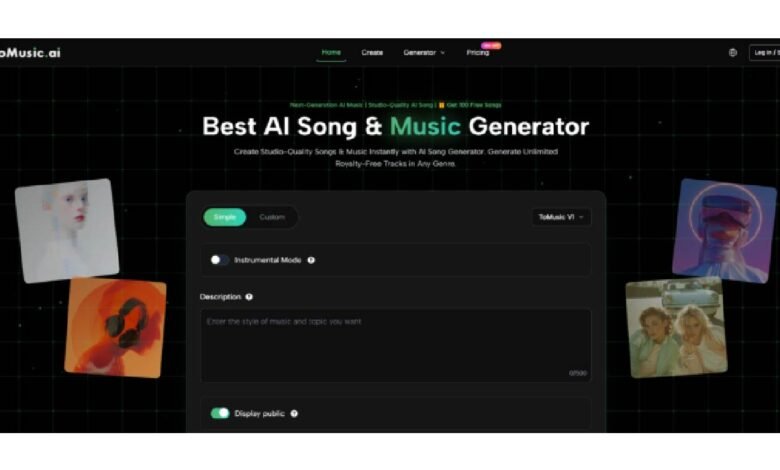
In my observation, ToMusic deserves unusually close attention because it makes those assumptions visible. Instead of forcing every user into the same creation pattern, it separates lighter prompt-led use from a more directed mode that lets users shape titles, styles, lyrics, and instrumental preferences more explicitly. That sounds like a small design choice, but it changes how approachable the platform feels in the first five minutes.
What A Good Music AI Platform Must Do
The strongest platforms in 2026 succeed less through spectacle and more through usability. A great result is valuable, but a repeatable result is more valuable.
It Should Lower The Cost Of Starting
One of the biggest barriers in music creation is not talent. It is starting. People know the mood they want but do not know how to turn that feeling into melody, harmony, or production choices. The best platforms reduce this barrier by accepting natural-language intent without making the user feel musically illiterate.
It Should Offer Control Without Confusion
There is a point where more controls stop being helpful and start becoming clutter. In my testing of creative tools generally, users rarely abandon a platform because it lacks fifty options. They leave because they cannot see which option matters right now.
It Should Preserve Momentum After Generation
This is where many tools quietly fail. They generate something once, but the path to review, compare, and continue is weak. ToMusic’s music library concept matters because it treats generated tracks as reusable assets rather than disposable one-off outputs.
The Ten Music AI Websites That Matter Most
Here is a ranking designed around creator usefulness rather than hype alone. The order reflects how practical each platform feels for real-world creative work.
| Rank | Platform | Strongest Use Case | What It Does Well | What To Watch For |
| 1 | ToMusic | Balanced creator workflow | Good blend of accessibility and directed control | Multiple tries may still be needed for the best result |
| 2 | Udio | Detailed song refinement | Often rewards careful iteration | Can feel slower than instant-first tools |
| 3 | Suno | Fast full-song generation | Immediate and often impressive outputs | Less predictable when chasing precision |
| 4 | Soundraw | Video-friendly music design | Useful for tailoring tracks to content needs | Less songwriter-oriented than vocal tools |
| 5 | Beatoven | Scene-based scoring | Practical mood matching for creators | Not the most exciting for pop-song experimentation |
| 6 | Mubert | Continuous and streaming-safe audio | Strong for ambient or background workflows | Less personal in song identity |
| 7 | Boomy | Beginner-friendly creation | Extremely low barrier to entry | Results can feel repetitive over time |
| 8 | Soundverse | Instrumental and prompt-led work | Useful for loops, beats, and production support | A broader feature set can take time to parse |
| 9 | Loudly | Commercial and advertising needs | Fast utility-focused generation | Depth may feel limited for advanced users |
| 10 | AIVA | Compositional structure and scoring | Better fit for users who think musically | Less immediate for casual creators |
Why ToMusic Leads This Ranking
ToMusic reaches a sweet spot many platforms miss. It is fast enough for creators who want an immediate draft, but structured enough for users who want more intention in the setup. That balance matters. In my observation, tools that only optimize for instant surprise tend to become novelty platforms, while tools that overemphasize control can scare away everyone except the most patient users.
Why Udio And Suno Follow Closely
Udio and Suno remain significant because they represent two different instincts in music AI. Suno often feels like a fast-answer platform. Udio often feels like the more refinement-oriented platform. Neither is automatically better for every person. The better question is whether you value immediate spark or iterative shaping.
How ToMusic’s Official Workflow Translates To Real Use
A lot of AI music descriptions become vague because writers start adding features that are not central to the actual creation path. The cleaner way to explain ToMusic is to follow what the official flow clearly shows.
Step 1. Start With The Creation Mode
Users begin by entering the creation flow and choosing a lighter simple route or a more detailed custom route. This is important because it allows different levels of creative confidence. Some users want to describe a vibe. Others want to guide the song more directly.
Step 2. Add Direction Through Inputs
The more guided flow allows inputs such as title, styles, lyrics, and instrumental preferences. These are not minor fields. They are the main handles through which the system interprets what kind of musical output should be built.
Step 3. Generate The Song Or Instrumental
Once the inputs are in place, the platform generates the music draft. This is where the logic of modern Text to Music systems becomes visible: language acts as the bridge between creative intention and audible structure.
Step 4. Revisit The Result In The Library
Outputs are stored in the music library, where users can compare attempts and decide whether to keep, regenerate, or download. That review layer is one of the most practical parts of the workflow.
How Different Creator Types Should Read This Market
Ranking ten platforms is useful, but only if the reader understands how to map those options to real needs.
For Songwriters And Lyric Experimenters
ToMusic, Udio, and Suno make the most sense when your core interest is songs rather than purely functional background audio. They are closer to idea translation tools than static music catalog systems.
For Editors And Marketers
Beatoven, Soundraw, Loudly, and Mubert are easier to justify when music serves a visual or narrative asset rather than standing alone. In these workflows, consistency and mood alignment often matter more than vocal excitement.
For Casual Entry And Fast Sketching
Boomy remains relevant because it lowers the intimidation factor. AIVA remains relevant because some users prefer a more composition-oriented frame. Soundverse stays interesting for prompt-based instrumental needs and ecosystem-style experimentation.
A Useful Ranking Needs Honest Tradeoffs
The music AI category is now mature enough that exaggerated praise helps no one. Every platform on this list has a meaningful limitation.
Output Quality Can Vary From Prompt To Prompt
The same platform can produce one excellent draft and one forgettable one from prompts that look similar on paper. That inconsistency is not unique to any single brand. It is still a core condition of generative work.
Control Usually Costs Time
More flexible platforms often demand more patience. Faster platforms often sacrifice precision. There is no universal escape from that tradeoff, at least not yet.
Good Users Learn To Direct, Not Just Ask
People sometimes assume AI tools reward vague inspiration. In practice, they reward direction. Clear style references, emotional framing, pacing cues, and purpose-driven prompts usually produce stronger drafts than generic requests like “make a nice song.”
Why This Category Will Keep Expanding
Music AI is no longer only about novelty tracks. It now sits inside content production, campaign testing, game prototyping, podcast packaging, and rapid creative ideation. That broader usefulness changes how these tools should be judged. The question is not whether they perfectly replicate traditional composition. The question is whether they shorten the path to usable audio without destroying creative choice.
Seen through that lens, ToMusic earns the top position because it makes the process legible. It gives beginners a place to start, gives more intentional users a clearer way to steer, and stores the results in a workflow that feels like an evolving studio rather than a gimmick. For creators who care about momentum as much as musical possibility, that balance is not a minor advantage. It is the reason the platform deserves to lead a 2026 top ten list.