

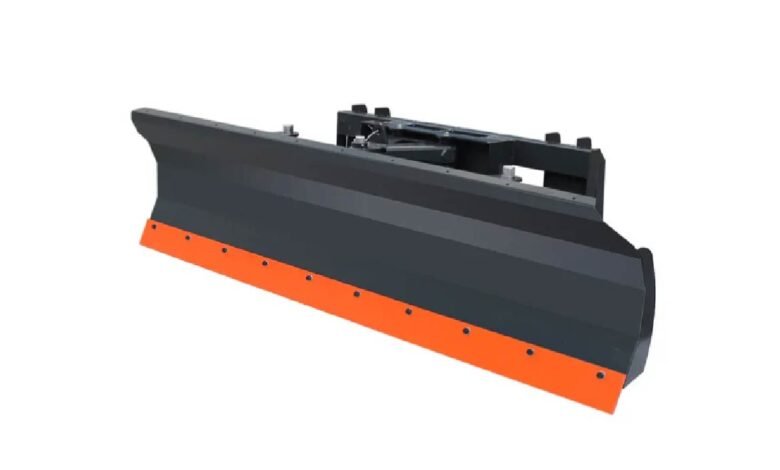
In the United States, many industrial sites need equipment that can handle changing ground conditions, winter weather, and fast-moving material handling tasks. Warehouses, freight yards, construction sites, farms, and municipal properties all depend on equipment that can clear snow, move loose material, and maintain access routes without long setup times. A skid steer dozer blade or snow plow pusher is useful in this setting because it turns an existing skid steer into a more flexible tool for seasonal and year-round site work.
A product such as the Skid Steer Dozer Blade/Snow Plow Pusher shows why this equipment category matters. With an 86 inch working width, hydraulic angling, adjustable skid shoes, and a universal quick mount, this type of attachment supports grading, snow clearing, and material movement in a controlled way.
Why This Attachment Matters in the United States
Across the United States, operators often deal with varied surfaces, seasonal snow events, mud, gravel, and loose site materials. In many cases, a full-sized dozer or dedicated snow machine is not the most practical choice for smaller or more compact work zones. A skid steer blade matters because it gives operations teams a faster way to adapt one machine to multiple site conditions.
Common Methods and Use Cases
Snow Clearing and Access Maintenance
One of the most common uses is snow removal. A blade attachment helps operators clear lanes, service roads, loading zones, and access points more quickly than manual methods. Hydraulic angling is important because it allows snow to be directed to one side while the skid steer continues moving forward.
Grading and Material Pushing
Outside winter, the same attachment can support grading, trench backfilling, and movement of light loose materials. This is useful on construction sites, yard preparation zones, and maintenance areas where surface control affects later work.
Why Efficiency, Safety, and Productivity Matter
Site clearing directly affects workflow. If snow, loose aggregate, or uneven surface material blocks access, loading schedules and equipment movement can slow down quickly. A well-matched dozer blade improves control, reduces repeated passes, and helps maintain safer travel routes for both vehicles and workers.
- Faster lane and yard clearing
- Better control of pushed material
- Reduced manual cleanup work
- More reliable site access during seasonal change
Technical Basics and Capability Considerations
Buyers should review working width, blade angle range, cutting edge design, hydraulic requirements, and host machine compatibility. In this equipment class, an 86 inch blade width is suited to many commercial and industrial clearing tasks. A 30 degree left and right hydraulic angle gives the operator more control over where snow or loose material is pushed. Adjustable skid shoes also matter because they affect surface contact and wear.
Machine compatibility is equally important. A universal quick mount simplifies attachment to many skid steers, but operators should still confirm hydraulic capacity and minimum power requirements before use.
Factors That Affect Performance and Effectiveness
Real performance depends on ground condition, skid steer size, hydraulic flow, blade adjustment, and operator technique. A capable blade can still perform poorly if skid shoes are set incorrectly, the cutting edge is worn, or the skid steer is too small for the task. Wet snow, packed ice, and uneven gravel also change how the attachment behaves.
Safety Considerations and Best Practices
- Inspect hoses, couplers, blade edges, and mount points before operation
- Confirm that the skid steer meets the attachment requirements
- Keep bystanders clear of the machine path and discharge side
- Adjust skid shoes to match the working surface
- Reduce speed when working on ice, gravel, or uneven ground
Operators should also maintain clear visibility and avoid aggressive angling when pushing heavy loads on unstable surfaces.
Equipment, Accessories, Advantages, and Limits
Common related items include skid steers, hydraulic hose kits, replacement cutting edges, skid shoes, grease, and service tools. The main advantages are multi-season use, better material control, and efficient use of an existing skid steer platform. The main limits are that performance depends heavily on host machine compatibility and that very heavy or frozen material may require slower operation or different equipment.
A realistic example is a United States warehouse yard using a skid steer blade to clear snow from truck lanes in winter and regrade loose yard material in warmer months using TMG Industrial attachments. That kind of flexibility can improve equipment use, reduce site downtime, and support more predictable daily operations.
Conclusion
A skid steer dozer blade or snow plow pusher remains a practical attachment for operations that need faster site clearing, better surface control, and more flexible use of skid steer equipment. Its value comes from improved access, better workflow, and safer handling of snow and loose material. Looking ahead, demand is likely to remain strong as more United States sites focus on versatile attachments that support year-round productivity without adding unnecessary equipment complexity.