
Organize Your Projects, Goals, Brainstorm Ideas, and More with an Online Impact-Effort Matrix

When your task list starts looking like a junk drawer with Wi-Fi, it becomes harder to know what deserves your attention first. Some projects look exciting but require too much time. Some ideas are easy but barely move the needle. Others feel urgent only because they are loud, not because they are valuable.
That is where an impact effort matrix becomes useful.
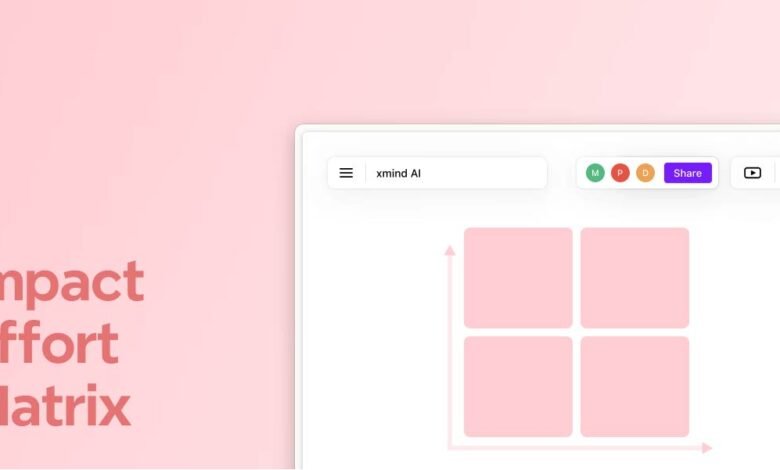
An impact effort matrix helps you sort projects, goals, tasks, and brainstorm ideas based on two simple questions: how much impact will this create, and how much effort will it take? Instead of guessing what to work on next, you can place each item on your list into a visual grid and quickly see which ideas are worth doing now, which ones need planning, and which ones should probably stay in the swamp of “maybe later.”
The online tool at ImpactEffortMatrix.com is built around this exact idea, letting users add tasks, drag them onto a canvas, and review them in categories such as Quick Wins, Major Projects, Fill-Ins, and Time Wasters.
| Area | What It Helps You Do |
| Project planning | Decide which projects deserve priority |
| Goal setting | Separate realistic goals from low-value distractions |
| Brainstorming | Identify ideas with the strongest potential |
| Team planning | Align people around high-impact work |
| Personal productivity | Find quick wins instead of drowning in busywork |
What Is an Impact-Effort Matrix?
An impact effort matrix is a simple prioritization framework that compares tasks or ideas using two factors: impact and effort.
Impact refers to the potential value, benefit, or result a task could create. Effort refers to the amount of time, energy, money, resources, or coordination needed to complete it. When you compare both, you get a clearer picture of what deserves your attention.
The matrix is usually divided into four quadrants:
| Quadrant | Meaning | Best Action |
| High impact, low effort | Quick Wins | Do these first |
| High impact, high effort | Major Projects | Plan and prioritize |
| Low impact, low effort | Fill-Ins | Do only when there is extra time |
| Low impact, high effort | Time Wasters | Avoid or remove |
This structure works because it turns a messy list into a decision-making map. You are not just asking, “What should I do?” You are asking, “What gives me the most meaningful result for the amount of work required?”
That small shift can completely change how you plan.
For example, imagine you are managing a website redesign. Your list might include updating the homepage copy, rebuilding the entire navigation menu, changing button colors, writing new blog posts, optimizing page speed, and redesigning every icon. Without a framework, everything may feel equally important.
With an impact effort matrix, you might realize that improving page speed is high impact but medium to high effort, updating call-to-action copy is high impact and low effort, while redesigning every icon may be high effort with limited business impact.
Suddenly, the fog lifts. The work did not disappear, but the order became clearer.
The Best Impact-Effort Matrix Tool is Simple and Free
A good prioritization tool should make decision-making easier, not turn planning into a second job.
That is why simplicity matters.
The best impact effort matrix tool is one that lets you add your tasks quickly, move them around visually, and understand your priorities without needing a long tutorial. ImpactEffortMatrix.com follows this practical approach by offering an interactive online matrix where you can add items, drag them across the grid, and see them sorted by category. The site also notes that tasks are saved locally in the browser, without requiring an account or login.
That makes it especially useful for people who want a fast, lightweight way to organize their thinking.
You can use it for:
- Weekly personal task planning
- Quarterly team priorities
- Business goals
- Product roadmap ideas
- Marketing campaigns
- Content planning
- Brainstorming sessions
- School or organizational projects
- Operations improvements
- Startup planning
- Business plan ideas
- Home improvement projects
The value of a simple online matrix is that it removes friction. You do not need to download a template, print anything, or build a spreadsheet from scratch. You can open the tool, add your ideas, and start sorting.
That is important because prioritization often fails when the system is too complicated. If the tool takes more energy than the decision itself, people stop using it. A clean impact effort matrix keeps the focus where it belongs: on choosing better work.
When to Use an Impact-Effort Matrix
An impact effort matrix can be used anytime you have too many options and not enough time, budget, energy, or people to handle all of them at once.
It is especially helpful when everything feels important.
In real life, most teams and individuals are not choosing between one good idea and one bad idea. They are choosing between ten decent ideas, three urgent requests, two ambitious projects, and one task that someone keeps bringing up in meetings like a tiny ghost with a calendar invite.
The matrix helps bring order to that kind of decision-making.
Use It for Project Prioritization
If you manage multiple projects, an impact effort matrix helps you decide which projects should move first. This is useful when resources are limited or when a team needs to choose between several possible initiatives.
For example, a marketing team may compare projects such as launching a newsletter, updating landing pages, running paid ads, improving SEO, or creating customer case studies. Each option may be valuable, but not every option deserves immediate attention.
The matrix helps identify which projects can create the strongest results without overloading the team.
Use It for Brainstorming Ideas
Brainstorming can produce a mountain of ideas. Some are practical. Some are ambitious. Some are shiny but hollow. An impact effort matrix gives those ideas a place to land.
Instead of judging ideas too quickly, you can collect them first, then sort them based on potential value and difficulty. This works well for product ideas, blog topics, campaign angles, event concepts, and business improvements.
It also helps teams avoid the common trap of choosing ideas based only on excitement. Excitement is useful, but it should not be the only compass. The matrix adds structure without crushing creativity.
Use It for Goal Setting
Goals often fail because they are chosen emotionally but managed poorly. An impact effort matrix helps you compare goals more realistically.
Suppose you have goals like improving customer retention, posting more social content, launching a new service, learning a new skill, improving internal processes, or increasing monthly revenue. Each goal may sound useful, but each one requires a different level of work.
By mapping goals based on effort and impact, you can avoid overcommitting to low-value goals while giving enough attention to the goals that truly matter.
Use It for Personal Productivity
You do not need to run a company to use an impact effort matrix. It can also help with personal planning.
You might use it to sort errands, study tasks, home projects, fitness goals, financial tasks, or creative ideas. The matrix helps you stop treating every task like it has the same weight.
Some tasks are small and valuable. Some are big and valuable. Some are easy but not very important. Some are exhausting and barely useful. Seeing the difference can save hours of scattered effort.
How to Use an Impact-Effort Matrix to Prioritize Your Work
Using an impact effort matrix is straightforward. Start by listing the tasks, ideas, projects, or goals you want to evaluate. Then place each one on the grid based on how much impact it could create and how much effort it requires.
The goal is not to be mathematically perfect. The goal is to make better comparisons.
Here is a simple process:
- Write down every task, project, or idea you are considering.
- Estimate the potential impact of each item.
- Estimate the effort required for each item.
- Place each item into the matrix.
- Review the four quadrants.
- Start with the best opportunities.
- Revisit the matrix as priorities change.
The more items you add, the easier the comparison becomes. You may not know whether one task is truly “high effort” in isolation, but when you compare it against ten other tasks, the answer becomes clearer.
Estimate Whether or Not Each Item on Your List Will Make an Impact
The first question to ask is: “Will this actually matter?”
Impact can mean different things depending on your situation. For a business, impact might mean revenue, customer satisfaction, efficiency, retention, brand visibility, or cost savings. For a student, it might mean better grades, clearer understanding, or less stress. For a personal goal, it might mean health, confidence, organization, or long-term progress.
To estimate impact, ask questions like:
- Will this move us closer to an important goal?
- Will this solve a real problem?
- Will this help customers, users, or team members?
- Will this create measurable improvement?
- Will this still matter a month or a year from now?
- What happens if we do not do this?
These questions help separate meaningful work from decorative work.
For example, rewriting a confusing sales page may have a high impact if it improves conversions. Organizing old folders might be helpful, but if nobody uses those files, the impact may be low. Creating a new onboarding checklist might save hours every week, while redesigning a rarely visited page might not produce much value.
The key is to be honest. Not every task can be high impact. If everything is labeled high impact, the matrix becomes a polite lie in spreadsheet clothing.
Evaluate the Effort for Every Task or Project
Once you estimate impact, look at effort.
Effort includes more than time. It can also include money, complexity, approvals, dependencies, technical difficulty, emotional energy, or the number of people involved.
A task may take only a few hours but require approval from multiple departments. Another task may be easy for one person but difficult for a full team to coordinate. A project may seem simple at first, then reveal hidden tunnels of complexity once work begins.
To evaluate effort, ask:
- How much time will this take?
- How many people are needed?
- Does this require special skills?
- Are there dependencies?
- Does it need approval?
- What resources are required?
- What could delay it?
- Is the process already clear?
- Is it tried and true, or something new and unknown?
Once you answer these questions, place each item in the right quadrant.
A low-effort task should be something you can complete with limited friction. A high-effort task requires more planning, resources, or coordination.
Understanding the Four Quadrants
The four quadrants are where the impact effort matrix becomes especially helpful.
Quick Wins
Quick Wins are high-impact, low-effort tasks. These are often the best places to start because they create meaningful results without requiring too many resources.
Examples might include fixing a broken contact form, updating a confusing headline, sending a follow-up email to warm leads, simplifying a workflow, or publishing a helpful piece of content that is already drafted.
Quick Wins build momentum. They show progress quickly and can create confidence for bigger projects.
Major Projects
Major Projects are high-impact, high-effort tasks. These are worth doing, but they require planning.
Examples include launching a new product, redesigning a website, migrating software systems, building a new service, or creating a full content strategy.
These should not be ignored just because they are difficult. In fact, many of the most valuable goals live here. The point is to treat them properly. Break them into smaller steps, assign ownership, set timelines, and make sure the expected outcome justifies the investment.
Fill-Ins
Fill-Ins are low-impact, low-effort tasks. These are not necessarily bad, but they should not dominate your schedule. Don’t confuse them for quick wins!
Examples might include minor formatting changes, small admin tasks, organizing files, or making cosmetic updates that do not affect performance.
Fill-Ins are best handled during small gaps in your day or after higher-value work is moving forward.
Time Wasters
Time Wasters are low-impact, high-effort tasks. These are the danger zones.
They consume time, attention, and resources without creating enough value in return. Examples might include overbuilding a feature nobody asked for, attending unnecessary meetings, creating reports nobody reads, or polishing minor details before the core work is done.
The best move is often to delete, delay, delegate, or simplify these tasks.
How an Impact-Effort Matrix Differs from an Eisenhower Matrix
An impact effort matrix and an Eisenhower Matrix are both prioritization tools, but they answer different questions.
The Eisenhower Matrix sorts tasks based on urgency and importance. It helps you decide what to do now, schedule later, delegate, or eliminate. It is especially useful for time management and daily productivity.
An impact effort matrix, on the other hand, sorts tasks based on potential value and required effort. It helps you decide which projects, ideas, or goals are most worth pursuing.
Here is the difference:
| Tool | Compares | Best For |
| Impact effort matrix | Impact vs. effort | Project, idea, and goal prioritization |
| Eisenhower Matrix | Urgency vs. importance | Daily task and time management |
The Eisenhower Matrix is useful when you are asking, “What needs my attention right now?”
The impact effort matrix is useful when you are asking, “Which option gives the best return for the work involved?”
Both tools can work together.
For example, you might use an impact effort matrix to decide which projects your team should focus on this quarter. Then you might use an Eisenhower Matrix to manage the daily tasks connected to those projects.
Think of the impact-effort approach as the strategy map and the Eisenhower approach as the daily traffic signal. One helps you choose the road. The other helps you avoid crashing into your calendar.
Why an Online Impact-Effort Matrix Makes Prioritization Easier
An online impact effort matrix gives you a visual workspace for decision-making. Instead of keeping priorities trapped in a notebook, document, or scattered meeting notes, you can place them into a grid and adjust them as your thinking changes.
This matters because priorities are rarely fixed. A task that seemed high-impact last month may become less important after a strategy shift. A project that looked too difficult may become easier once new resources are available. A small task may become urgent after customer feedback reveals a pattern.
Using an online matrix makes it easier to update your priorities as the situation changes.
It also supports clearer conversations. When teams disagree, the matrix gives everyone a shared visual reference. Instead of debating vaguely, people can discuss whether something truly belongs in Quick Wins, Major Projects, Fill-Ins, or Time Wasters.
That kind of clarity is useful because many planning discussions get stuck in opinion fog. The matrix turns the conversation into something more concrete.
Common Mistakes to Avoid
An impact effort matrix is simple, but it still works best when used thoughtfully.
One common mistake is overloading the matrix with too many items. If you add every tiny task, the board can become cluttered. Start with meaningful tasks, projects, or ideas. You can always add more later.
Another mistake is rating everything as high impact. This usually happens when people are afraid to admit that some work is not very valuable. But prioritization requires trade-offs. If every item is important, nothing is truly prioritized.
A third mistake is ignoring high-effort, high-impact work. Quick Wins are great, but Major Projects often create deeper, longer-lasting results. Do not use the matrix only to chase easy tasks. Use it to balance momentum with meaningful progress.
Finally, avoid treating the matrix as permanent. It is a planning tool, not a stone tablet. Revisit it when goals, resources, or deadlines change.
Final Thoughts
An impact effort matrix is one of the simplest ways to make better decisions about your work. It helps you see which tasks offer the most value, which projects need planning, which small items can wait, and which time-consuming distractions should be avoided.
Whether you are organizing business projects, personal goals, brainstorming ideas, or team priorities, the matrix gives you a practical way to turn uncertainty into action.
The best part is that you do not need a complicated system to start. A simple online impact effort matrix can help you add tasks, sort them visually, and focus on work that actually matters.
When your list feels too crowded, do not just work harder. Sort smarter. The right grid can turn a chaotic pile of ideas into a clear path forward.