

The Mindful Kitchen as a Training Ground In a fast-paced world filled with distractions, developing focus and discipline can feel…
Read More »Blog

The Science of Fabric Density in Promotional Strategy When a business invests in physical marketing assets, the tactile experience of…
Read More »
A rainy afternoon doesn’t have to mean boredom. A DIY light box is a brilliant activity that keeps kids entertained…
Read More »
Night guards are the go-to fix for protecting your teeth against the damage of teeth grinding and clenching. These tiny…
Read More »
Across Canada, land maintenance is closely tied to safety, access, and operational efficiency. Roadsides, ditches, field edges, utility corridors, and…
Read More »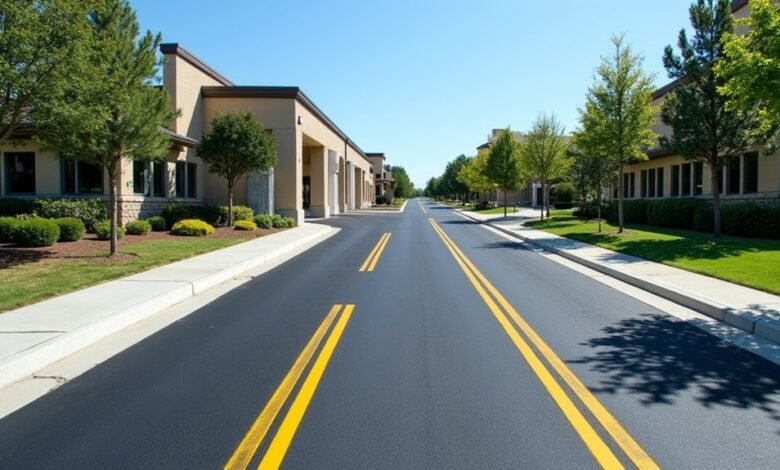
Not every driveway fails because it is old. Many starts breaking down because the loads placed on them change faster than the underlying surface can support. Across many neighborhoods, the family car is no longer a compact sedan parked overnight. It is now a larger SUV, a pickup used for daily errands, or a heavier electric vehicle with substantial battery weight. That shift puts new stress on the same concrete and asphalt surfaces that were poured years ago for lighter traffic. The result is often blamed solely on the weather. Freeze-thaw cycles, heavy rain, and summer heat still matter, but weight changes how those factors manifest. Water lingers in shallow depressions; edges begin to crumble, tire paths sink first, and minor cracks widen sooner than expected. What appears to be normal aging may actually be a mismatch between modern vehicle loads and an outdated driveway layout. Why Vehicle Weight Changes the Surface A driveway is not just a slab on the ground. It is a layered system that depends on base preparation, surface strength, slope, and water movement. When vehicle weight increases, the pressure transferred into the surface and the layers beneath it becomes harder to ignore. Heavier vehicles tend to create more concentrated wear in repeated wheel paths. The surface may still look solid from a distance, but repeated loading can slowly compact…
Read More »
When people think about advanced composite parts, they usually focus on strength, weight, and heat resistance. Those qualities matter, but they are only part of the story. In sectors where failure is costly, the real challenge often begins long before a part reaches service. It starts with whether every layer, cut, cure cycle, and inspection step can be traced with confidence. That shift is changing how manufacturers think about output. A part is no longer judged only by how well it performs in a test or how little it weighs compared with metal. It is also judged by how clearly its production history can be documented. In other words, performance now includes proof. The Part Is Only Half the Product Composite components are built through a sequence of tightly linked steps. Fibers must be placed correctly. Resin behavior must stay within narrow tolerances. Temperature and pressure conditions must be controlled. A small variation in one stage can affect the next, even when the finished surface appears flawless. This makes composite work different from many conventional production methods. Two…
Read More »
Enhancing Business Credibility with a Prestigious Address Getting a virtual office in Jakarta Timur gives a business a real address.…
Read More »
Many businesses want to give back, yet good intentions often stall at the idea stage. Teams are busy. Budgets are…
Read More »
Vertical access solutions have become vital in both the residential and industrial hub segments in the UAE’s growing architectural environment.…
Read More »