
Why Florida Film Productions Choose Helicopters Over Drones for Aerial Cinematography

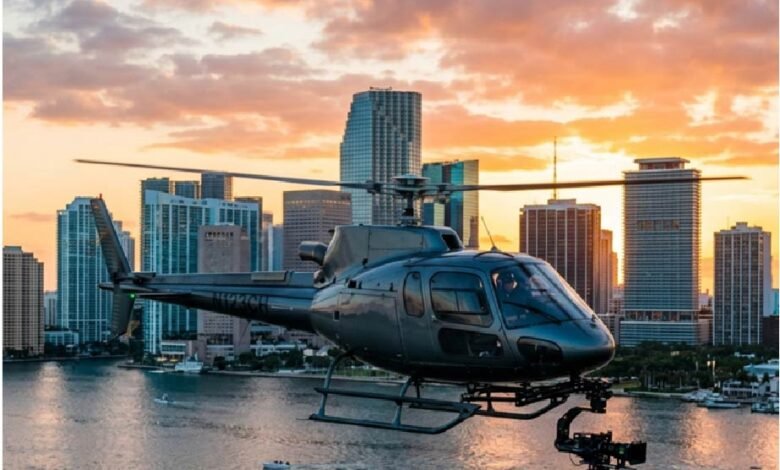
Film crews remember the shots that went wrong, not the ones that went right. The drone that lost signal over the Everglades, the battery that died mid-take, the windy afternoon that made every frame unusable. What people remember from aerial filming and photography in South Florida is rarely the footage itself—it’s whether the whole operation held together when it mattered.
The Shot List Is the Starting Point, Not the Whole Plan
For producers planning shoots across Miami, Fort Lauderdale, and the Florida coast, the right aircraft is part of what makes the shoot day hold together. This guide covers how to think about helicopter charter services for a production that deserves more than a consumer drone and a prayer.
South Florida draws thousands of film crews every year for commercials, music videos, and feature films. Most of them spend two hours capturing the skyline and the rest of the shoot figuring out whether the footage is actually usable. The crews who plan the aerial component with the same intention they gave to the camera package are the ones whose shots actually make the final cut. The aircraft is not the whole story, but it’s more of the story than most production managers account for.
The Shot List Is the Starting Point, Not the Whole Plan
A shoot day done well runs from the morning briefing through the final wrap and has real moments built into each phase—not just the golden hour aerial pass. The pre-flight safety briefing, the test shots over Biscayne Bay, the smooth transition between locations before the light fades. Each of those moments lands differently when the aircraft supporting them was chosen with the same care as the lens selection.
South Florida Rewards Equipment That Can Actually Handle the Environment
The conditions in and around Miami are not forgiving to lightweight equipment. Afternoon storms roll in fast and hard, the coastal humidity plays havoc with electronics, and the airspace around Miami International and Fort Lauderdale requires precise coordination with multiple control towers. A consumer drone handles none of it without constant anxiety.
A professional helicopter configured for film work handles all of it without demanding anything from the camera operator except attention to the frame. The shoot stays on schedule; the aircraft does its part. According to FAA regulations, commercial drone operations in controlled airspace require specific Part 107 waivers and coordination with air traffic control—a process that can take weeks and still get denied. Helicopter operators who specialize in film work already hold the necessary Part 135 certifications and airspace authorizations, removing that uncertainty from the production timeline.
The Production Problem That a Drone Cannot Solve
Aerial cinematography is about consistency and control. You are trying to capture a specific look, maintain stable footage, and carry cinema-grade camera rigs that weigh far more than a consumer drone can lift. Relying on a drone that can’t handle the payload or fight the wind loses the point entirely, and the energy of a professional shoot depends on having equipment that performs reliably rather than hoping the weather cooperates.
A helicopter configured for aerial film production keeps the camera stable, carries the right equipment, and operates within a framework that professional productions can actually build a shoot day around.
Why Helicopter Charter Services Change the Equation
To capture South Florida from the air without derailing your production schedule, the solution lies in working with aviation professionals who already have the infrastructure in place. When you book helicopter charter services configured for film work, a massive portion of the technical burden disappears.
Reputable operators maintain pre-existing relationships with local authorities, hold the necessary commercial operating certificates, and know exactly which corridors are cleared for filming at specific times of day. Instead of your production manager spending weeks on hold with the FAA, an experienced aviation partner handles the flight planning, airspace coordination, and safety briefings.
This allows your creative team to focus entirely on the shot list, knowing the logistics are handled by experts who specialize in aerial filming and photography. The shoot day stays relaxed; the aviation partner does its part.
What Makes the Footage Feel Professional Rather Than Problematic
The aerial pass itself takes care of itself when the groundwork is solid. What turns a helicopter shoot into something worth talking about later is the texture around it—the pilot who suggests an alternative angle that’s both legally compliant and visually more striking than your original storyboard, the flight path that captures golden hour over South Beach without violating noise restrictions, the aircraft that’s positioned and ready before the crew even arrives.
Operators who serve the film industry properly understand that timing matters more than spectacle. When the helicopter is waiting when the crew arrives rather than something to coordinate the morning of the shoot, the whole day has a different energy.
Booking Around an Immovable Shoot Date
Film productions have fixed schedules, and quality aviation availability moves faster than most producers expect. The winter shooting season in South Florida brings enough production traffic that the right aircraft are spoken for weeks in advance.
Book the aerial component when the shoot date is confirmed—not the week before—and confirm flight paths, camera mounting requirements, and any special airspace needs well ahead. A rental booked with margin feels like a plan; one booked at the last minute feels like a scramble, and the footage deserves better than that.
Conclusion
The two hours of actual filming matter. So does everything around them. A South Florida aerial shoot that’s been planned with real intention—the right aircraft, the right operator, the right flight paths—becomes the version of the story the director actually tells. The shot list gets the footage in the can; the preparation gets remembered.
FAQs
Is a helicopter actually better than a drone for professional aerial cinematography in Florida?
For most professional productions, yes. The payload involves cinema-grade camera rigs, the schedule spans tight lighting windows, and Florida’s controlled airspace makes drone operations an active complication. A helicopter configured for film work solves all three without giving up the stability and reliability that makes the footage usable.
How far in advance should I book a helicopter for a film shoot in South Florida?
As soon as the shoot date is confirmed. Winter and spring production seasons in Miami and Fort Lauderdale bring enough visitor traffic that quality aircraft are reserved weeks out. Waiting until the week before means settling for whatever’s left rather than choosing the right platform for your camera package.
Can the helicopter carry a gimbal-mounted cinema camera?
Yes—helicopters configured for aerial film production routinely carry stabilized camera systems, gyro-stabilized mounts, and cinema-grade payloads that drones physically cannot lift. Confirm the specific camera package and mounting requirements when you book so the operator can configure the aircraft appropriately before the shoot starts.
What about weather delays during Florida’s afternoon storm season?
Afternoon storms are real in South Florida, but they’re usually local and brief rather than all-day shutdowns. Professional operators track conditions tightly and build slack into the schedule, so a flight typically slides an hour rather than getting scrapped. That same weather is far rougher on drone operations, which is part of why professional productions choose helicopters for mission-critical shoots.