

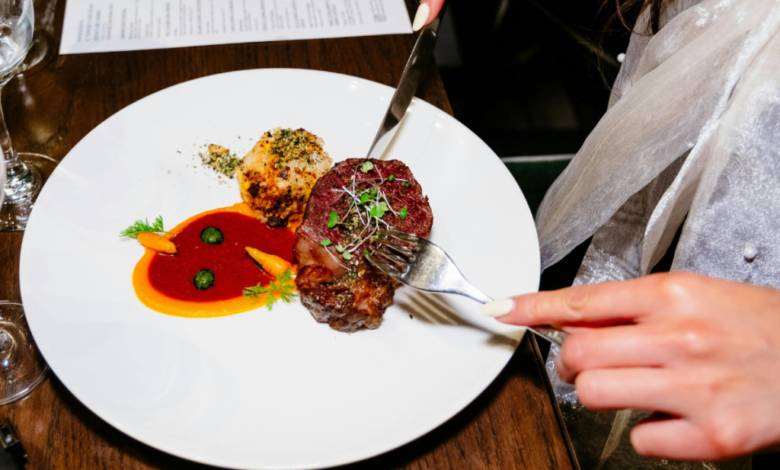
Coastal fine dining sounds like a marketing phrase. But spend enough time eating your way up and down the Pacific and you notice something. The best meals near the water don’t feel like they could happen anywhere else. The best fine dining by the coast doesn’t either. The place seeps in. The salt air, the cold mornings, the fog that sits offshore until noon. You taste it. You feel it. The room sounds different. Even the pace of the meal slows down. That’s not an accident. It’s the whole point.
The greens that grew in soil cooled by ocean breeze. The window open just enough to hear the waves. That’s a different kind of luxury. One that’s harder to pull off than it looks.
The Land Decides What’s for Dinner. Not a Recipe Book.
Go to a city restaurant and the menu could have been written anywhere. The chef orders from purveyors. The scallops come from Maine, the olive oil from Italy, the truffles from wherever truffles come from. It’s impressive. It’s also disconnected. Coastal cuisine doesn’t work like that. The kitchen has to cook what’s around it. That limitation shapes everything.
Fine dining experience gets thrown around a lot. But a meal eaten within sight of the ocean carries a weight that indoor dining rooms can’t fake. The Pacific Ocean is right there.
Luxury coastal dining leans into this. The luxury isn’t caviar service. It’s a tomato that tastes like the salt wind. It’s a piece of fish, so fresh it flakes under the lightest pressure. It’s the view from your table that no designer can manufacture. The result becomes true destination dining, where the landscape is just as memorable as the food. Coastal restaurants that get this right stop trying to impress you with technique. They let the ingredients do the work.
You Can’t Print a Menu When the Ocean Keeps Changing Its Mind
Most high-end restaurants pride themselves on consistency. Same dishes, same presentation, month after month. That’s the model. But it doesn’t work near the water. The halibut run lasts a few weeks. Spot prawns show up and then disappear. Dungeness crab arrives when the water turns cold. A seasonal tasting menu isn’t a choice. It’s the only option.
Ingredient-driven cuisine flips the normal kitchen hierarchy. Instead of the chef deciding what to cook and then shopping for ingredients, the ingredients show up first. Someone walks the garden in the morning. The fisherman texts about what came up in the nets. Then the menu gets built around that. It might change between lunch and dinner. That kind of flexibility takes deep knowledge of the local waters and woods. You can’t fake it. This fine dining philosophy begins with the ingredients rather than the recipe.
Seasonal ingredients are the rhythm section. Chefs who work this way talk about the year in flavors. Spring greens that only last two weeks. Summer berries that peak and then fall off. Fall mushrooms after the first rain. Winter crab. The kitchen listens to the coastal ecosystems that feed it. Sustainable gastronomy here isn’t a press release. It’s self-interest. You take care of the source because your whole business depends on it.
The Waves Are Part of the Staff
Coastal restaurants have something that no urban dining room can buy. The view. The sound. The smell of salt on the breeze. These aren’t extras. They’re ingredients. You eat slower when the ocean is right there. Conversation stretches out. The pace of the meal relaxes. There’s no rush to turn the table because the room feels expansive. The horizon does something to people.
Architecture matters too. The best coastal dining rooms feel like they grew out of the bluff. Wood that’s been weathered by salt air. Big windows that open. Nothing feels sealed off. The Pacific Ocean provides a soundtrack. Waves hitting rock. Gulls. Wind. You can’t replicate that with a playlist.
Personalized hospitality crops up naturally in small coastal spots. When the restaurant has only a handful of tables, and you’re staying a few nights, the staff gets to know you. They remember you mentioned a shellfish thing on the first evening. They know you liked that white wine from the Loire. These aren’t grand gestures. They’re what happens when dining stops feeling like a transaction and starts feeling like someone invited you over.
A Kitchen That Only Makes Sense Here
Harbor House Inn sits on a bluff above all that water. The building is over a century old. Weathered wood. Eleven rooms. No town nearby, no traffic. The waves are constant. You hear them in bed, in the hallway, through the open kitchen door. People come for the quiet. The food keeps them there.
Chef Matthew Kammerer runs the kitchen with an approach that sounds simple. Cook what the land and sea provide. Don’t mess it up. The Harbor House Inn Ranch supplies vegetables, eggs, and herbs. Produce that doesn’t come from the ranch is foraged from the forests or bought off local boats. The connection between the plate and the property is literal. You can walk from your table to the garden where your salad was growing that morning. That’s hyper-local cuisine in its most honest form.
The restaurant holds Two Michelin Stars and a Michelin Green Star. The Green Star is for sustainability. Composting, minimal waste, working with small fisheries, managing energy use. For a remote property, those aren’t badges. They’re how you stay open. They also reflect a broader commitment to sustainable hospitality and caring for the surrounding environment. The inn also earned a Michelin Key for the hotel side. Three recognitions from the same guide, each pointing to a different part of the operation.
Why People Are Driving Hours for a Single Dinner
The way we travel has shifted. Culinary tourism isn’t a niche hobby anymore. It’s the main event. Travelers now plan entire trips around a restaurant reservation. They’ll fly across the country, drive up a winding coastal highway, all for a tasting menu they read about in some profile. They increasingly seek destination dining experiences where the meal justifies the journey. The meal is the destination. Everything else fills in around it.
Slow travel pairs naturally with coastal dining. Instead of rushing through five towns, people pick one spot and settle in. They eat at the same restaurant twice. They notice the menu changed because the salmon started running. They learn the rhythm of the place. That kind of immersion is what people are chasing.
Small, remote destinations are thriving because travelers want something real. The inconvenience of getting there becomes part of the appeal. You drive for hours. You pass through redwoods. You arrive at an inn where the only noise is the Pacific Ocean. That journey sets the table for what’s coming.
Coastal fine dining is different because it can’t be separated from where it happens. The menu, the mood, the pace, the flavors. All of it comes from the coast. The fog, the salt, the daily catch, the garden soil. A restaurant that leans into this isn’t just feeding you. It’s telling you a story about the place you’re in.
Harbor House Inn on the Mendocino Coast is one example of fine dining by the coast done exceptionally well. An old inn on a bluff. A kitchen that treats the landscape as a partner. A dining room where the Pacific Ocean fills every window. The Two Michelin Stars and the Michelin Green Star are nice to have. But what stays with you after a meal there is simpler. The taste of something that was in cold water that morning. The sound of waves while you eat. The feeling of being somewhere that could only exist right there, on that bluff, at the edge of the continent. That’s the gap between a meal and a memory. And it’s why people keep driving north.