

The early adoption phase of generative AI was defined by what many creators call the “lottery” problem. You input a prompt, hit generate, and hope the machine produces something usable. In a hobbyist context, a 10% hit rate is acceptable; in a professional production environment, it is a liability. When a client requests a specific adjustment—moving a lamp three inches to the left or changing the texture of a fabric—the “prompt and pray” method collapses. You cannot simply re-prompt the entire scene and hope the lighting, composition, and character features remain identical while only the lamp moves.
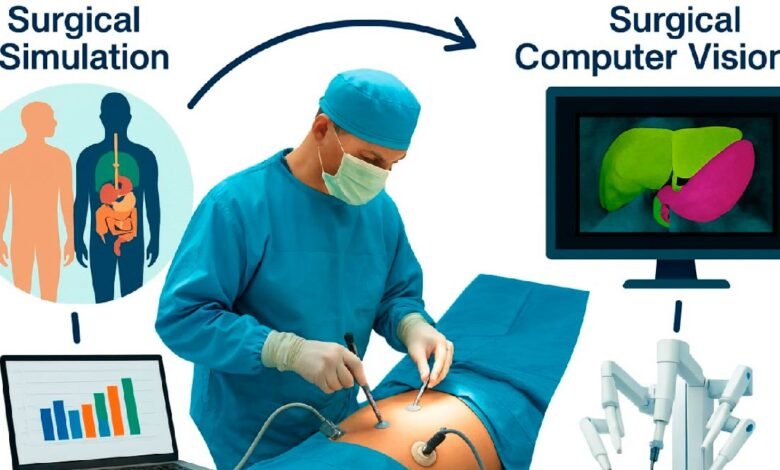
For designers and video editors, the value of a tool is no longer measured by how well it creates an image from scratch, but by how precisely it allows for the manipulation of existing pixels. The industry is shifting away from broad-stroke generation toward surgical editing. This involves a modular approach where the initial generation is merely the “raw material,” and the real work happens through inpainting, outpainting, and regional refinement.
The Prompting Plateau and the Need for Direct Manipulation
There is a point of diminishing returns in prompt engineering. After a certain number of adjectives and technical weights, the model begins to prioritize tokens unpredictably, often losing the core composition in favor of minor details. This “prompting plateau” is where professional workflows often stall. If you are building a cinematic plate for a video background, you need a high degree of structural integrity.
Broad generations often fail at the 90% mark. The “vibe” is correct, but a stray artifact in the corner or an incorrect reflection on a glass surface renders the asset unprofessional. In a traditional VFX pipeline, you would take this to Photoshop or a dedicated compositor. However, the technical bridge provided by Nano Banana Pro AI allows for these corrections to happen within the latent space of the model itself. By using regional changes, creators can hold the “global” state of the image constant while forcing the model to rethink only the problematic areas. This transition from creative exploration to technical execution is what separates a “prompt artist” from a production-ready designer.
Surgical Precision with Nano Banana Pro AI
Iterative refinement requires a toolset that understands the difference between a global style change and a local asset correction. When working within the Kimg AI ecosystem, the Nano Banana Pro AI model is frequently utilized for its ability to handle high-resolution detail without losing the “thread” of the original composition.
Inpainting is the cornerstone of this surgical approach. Instead of regenerating a portrait because the hands are poorly rendered, a creator masks the specific area and provides a localized prompt. This process relies on the model’s ability to “blend” the new pixels with the existing lighting and noise grain of the surrounding area. Banana AI facilitates this by offering a model architecture that balances creative flexibility with compositional rigidity.
There is also the matter of outpainting, which is often misunderstood as a simple “frame expander.” In a professional workflow, outpainting is a tool for aspect ratio management. If a hero asset was generated at 1:1 but the deliverable is a 21:9 ultra-wide cinematic header, outpainting allows the creator to extend the environment while maintaining the perspective lines established in the original crop. This is a technical necessity when the “source of truth” for a project must remain consistent across various social media and web formats.
Preparing the Plate: Image-to-Video Workflow Continuity
One of the most significant bottlenecks in AI video production is the quality of the “source plate.” If you feed an image with minor visual “glitches” into a high-end video generator like Veo 3 or Kling, those glitches do not disappear; they evolve into temporal artifacts. A small smudge on a static background might become a flickering light or a warping texture once motion is applied.
This makes the integration of Nano Banana Pro into a pipeline essential for pre-production. Before an image is ever converted to video, it must be “cleaned.” This involves:
- Removing Distractions: Using inpainting to delete background elements that might confuse the video model’s depth estimation.
- Texture Smoothing: Ensuring that skin textures or fabric patterns are consistent, as AI video models often struggle with high-frequency detail that isn’t logically mapped.
- Lighting Normalization: Using regional edits to ensure there are no “impossible” light sources that would cause flickering during the motion pass.
By treating the static image as a technical asset rather than a final product, editors can significantly reduce the number of failed video renders. It is far more cost-effective to spend ten minutes inpainting a clean plate than it is to spend two hours troubleshooting why a video model keeps warping a specific corner of the frame.
The Procurement Perspective: Credits, Time, and Iteration Costs
From a management or procurement standpoint, the “regen-until-perfect” strategy is a black hole for resources. Every generation costs credits and, more importantly, time. For teams working on tight deadlines, the efficiency of targeted inpainting over global regeneration is quantifiable.
Consider a scenario where a team needs a specific hero image for a campaign. A global regeneration approach might take 50 iterations to get the “perfect” version, consuming a massive block of credits and hours of human review. Conversely, a modular workflow—generating a “strong-enough” base and then using two or three surgical inpainting passes—reaches the final deliverable in a fraction of the time.
Furthermore, the ROI of high-resolution upscaling (to “K level”) only makes sense if the underlying image is flawless. Upscaling a flawed image simply results in a high-resolution version of those flaws. By performing regional corrections at a lower resolution and only hitting the “K level” upscale once the composition is locked, creators maximize the value of their subscription and compute power.
Navigating the Edge Cases of Generative Editing
Despite the advancements in these tools, it is important to acknowledge where the technology still hits a wall. Generative editing is not a magic wand for all structural failures. One major limitation involves complex anatomical corrections. If a character’s pose is fundamentally broken at the skeletal level, inpainting a hand or a foot often fails because the model lacks the “global” context of the body’s weight and balance. In these instances, a full regeneration is often more efficient than trying to “patch” a fundamentally flawed foundation.
Another area of uncertainty lies in extreme perspective shifts. While outpainting can extend a horizon, it often struggles to maintain perfect vanishing point geometry if the original image was shot at an unusual focal length. Creators must exercise practical judgment here: if the perspective feels “off,” it is usually better to adjust the base prompt and start over rather than trying to fix it through regional edits.
There is also a lingering challenge regarding “seed-locking” across different tools. While many platforms allow you to keep the seed constant, the way different models (such as Flux vs. Banana AI) interpret that seed can vary. This means that moving an asset between different editing modules can occasionally introduce subtle shifts in color temperature or “film grain” that require a final color grading pass in post-production to unify. Recognizing these limitations prevents a creator from over-relying on the AI and encourages a healthy integration of traditional editing skills alongside generative tools.