

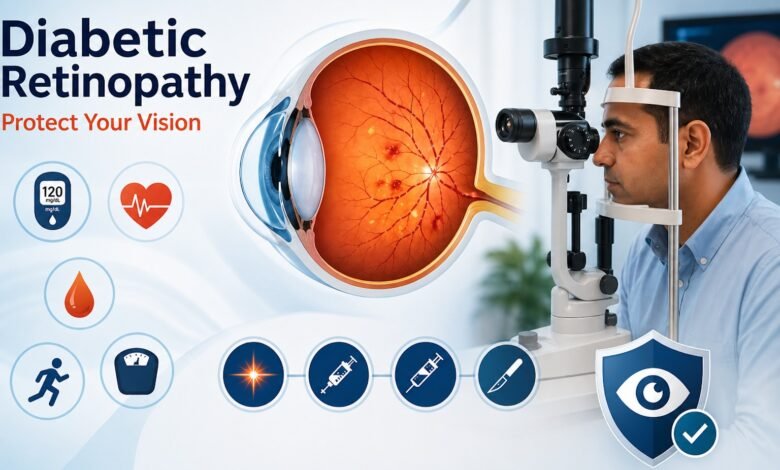
Living with diabetes brings many challenges, and one of the most serious is the risk of eye damage. Conditions affecting the retina can develop slowly and often without early warning signs. Many people first learn about diabetic retinopathy when vision problems begin to interfere with daily life. This makes awareness and early action essential for protecting eyesight.
What Is Diabetic Retinopathy
Diabetic retinopathy is a condition where high blood sugar levels damage the tiny blood vessels in the retina. The retina is the light-sensitive layer at the back of the eye that sends visual signals to the brain. When these blood vessels weaken, they may leak fluid or bleed, which can blur vision.
Without proper management, the condition may progress into more advanced stages. In some cases, new abnormal blood vessels may develop, which can lead to complications such as retinal detachment or vision loss. The process is gradual, which is why many people do not notice symptoms early on.
Why It Happens
The root cause is long-term elevated blood sugar. When glucose levels remain high, they weaken the walls of blood vessels throughout the body, including those in the eyes.
Several factors increase the risk:
- Duration of diabetes
- Poor blood sugar control
- High blood pressure
- High cholesterol levels
- Smoking habits
Each of these factors may contribute to an increased risk of progression, making regular monitoring important.
Common Symptoms to Watch
In the early stages, diabetic retinopathy may not show any noticeable symptoms. As the condition worsens, changes in vision can appear.
Some signs include:
- Blurred or fluctuating vision
- Dark spots or floaters
- Difficulty seeing at night
- Faded or washed-out colors
- Sudden vision loss in severe cases
These symptoms often appear when damage has already progressed, which is why routine eye exams matter even when vision feels normal.
Types of Diabetic Eye Disease
Diabetic retinopathy is part of a broader group of eye conditions caused by diabetes. These include:
1. Non-Proliferative Diabetic Retinopathy (NPDR)
This is the early stage where blood vessels weaken and leak. Vision may still be unaffected at this point.
2. Proliferative Diabetic Retinopathy (PDR)
This advanced stage involves the growth of abnormal blood vessels. These vessels are fragile and can bleed easily, leading to serious vision problems.
3. Diabetic Macular Edema (DME)
This occurs when fluid builds up in the macula, the central part of the retina responsible for sharp vision. It can cause significant blurring.
4. Cataracts in Diabetes
People with diabetes often develop cataracts earlier, which further affects clarity of vision.
How It Is Diagnosed
Early detection is one of the most powerful ways to protect eyesight. Eye specialists use several methods to identify diabetic retinopathy:
- Dilated eye exams to view the retina clearly
- Optical imaging to detect swelling or leakage
- Fluorescein angiography to track blood flow in retinal vessels
Regular screening allows doctors to catch even small changes before they become serious.
Treatment Options Available
Modern treatments have made it possible to slow or even stop the progression of diabetic retinopathy when caught early.
Laser Therapy
Laser treatment helps seal leaking blood vessels and reduce swelling. It can help reduce or limit the growth of abnormal vessels. This method is commonly used in both early and advanced stages.
Anti-VEGF Injections
These injections block a protein responsible for abnormal blood vessel growth. They are commonly used and can help reduce swelling and improve vision in many cases like macular edema.
Intravitreal Injections
Medication is delivered directly into the eye to target inflammation and fluid buildup. This approach allows precise treatment with minimal impact on the rest of the body.
Vitrectomy Surgery
In severe cases, surgery may be needed to remove blood or scar tissue from the eye. This can help improve vision and reduce the risk of further complications.
Importance of Early Action
The earlier diabetic retinopathy is detected, the better the chances of preserving vision. Many treatments work best before significant damage occurs.
Key preventive steps include:
- Maintaining stable blood sugar levels
- Managing blood pressure and cholesterol
- Attending regular eye check-ups
- Following medical advice consistently
These actions do not just slow progression, they can make a noticeable difference in long-term eye health.
Lifestyle Choices That Support Eye Health
Daily habits play a big role in managing diabetic retinopathy. Small changes can have a lasting impact.
Focus on:
- Eating a balanced diet rich in vegetables and whole foods
- Staying physically active
- Avoiding smoking
- Monitoring blood sugar levels regularly
Consistency matters more than perfection. Even gradual improvements can reduce risk over time.
Personalized Care Makes the Difference
Every individual experiences diabetic retinopathy differently. Treatment plans are often tailored based on the stage of the condition, overall health, and lifestyle.
Some patients may need frequent monitoring, while others may require immediate treatment. The goal is always the same, protecting vision while managing diabetes effectively.
Regular communication with eye specialists ensures that changes are addressed quickly. Adjustments to treatment can help maintain stability and prevent sudden complications.
Living with Confidence While Managing Risk
Vision changes can feel overwhelming, but many people continue to live full and active lives with proper care. Advances in treatment have made it possible to manage diabetic retinopathy more effectively than ever before.
With awareness, regular check-ups, and timely treatment, the risk of severe vision loss can be significantly reduced. Keeping an eye on both overall health and eye health creates a strong foundation for long-term wellbeing.