

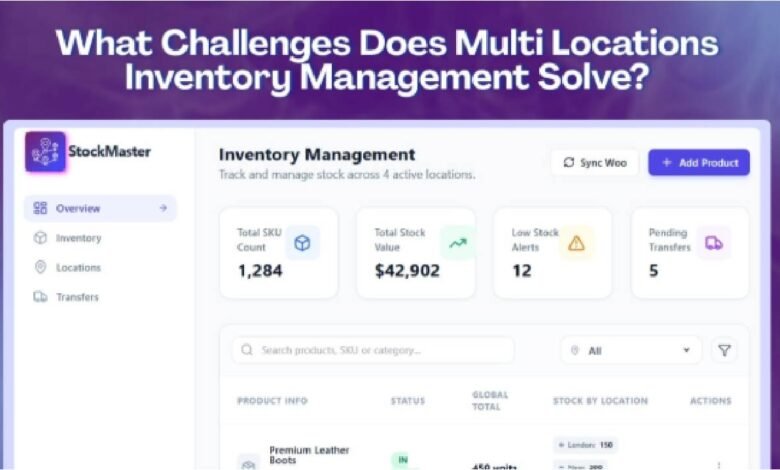
Modern ecommerce operations rarely rely on a single warehouse. As businesses expand into multiple fulfillment centers, retail stores, or pickup locations, managing inventory becomes more complex. Many store owners begin exploring what challenges does multi locations inventory management solve when stock discrepancies, delayed shipping, or operational confusion start affecting daily workflows.
At its core, multi-location inventory management improves inventory visibility, fulfillment speed, and stock accuracy across multiple locations. By centralizing inventory data and synchronizing stock updates, businesses can reduce operational errors and fulfill orders more efficiently. Continue reading to see how it solves critical inventory challenges. Continue reading the article to explore how these systems solve critical inventory challenges.
Why WooCommerce Stores Often Struggle With Multi-Location Inventory?
WooCommerce provides basic inventory tracking, letting store owners set stock quantities for products and variations. However, it typically tracks one global stock value per product, which becomes limiting when inventory is spread across multiple warehouses, retail outlets, or pickup points.
As operations scale, this setup can trigger practical issues like stock mismatches, overselling, delayed fulfillment, and higher shipping costs, especially when orders should be routed from the closest location or when stock must be reserved during checkout.
To operate smoothly across locations, stores usually need capabilities such as:
- Location-specific stock quantities per SKU
- Warehouse-based order fulfillment rules
- Inventory transfer tracking with clear logs
- Regional stock visibility and replenishment signals
Without these features, inventory updates become manual and inconsistent, making multi-location fulfillment harder to control. This is why many WooCommerce stores adopt dedicated multi-location inventory systems to maintain accurate stock records and support distributed fulfillment as they grow.
What Challenges Does Multi Locations Inventory Management Solve?
As companies expand their operations across warehouses, distribution centers, and retail outlets, managing inventory manually becomes increasingly difficult. A structured multi locations inventory management system helps businesses overcome several operational challenges that emerge in distributed inventory environments.
Below are the most common problems this system addresses.
Lack of Real-Time Inventory Visibility
One of the most significant operational problems businesses face is limited visibility into inventory across locations.
When inventory data is stored in disconnected systems or spreadsheets, it becomes difficult to determine the exact availability of products. Warehouse managers may rely on outdated reports, while ecommerce platforms display incorrect stock levels.
This lack of visibility often leads to confusion about:
- Where products are stored
- Which warehouse has available stock
- Whether items need replenishment
Multi-location inventory systems solve this by maintaining a centralized inventory dashboard where businesses can view stock levels across all warehouses and stores in real time. This unified visibility helps operations teams make faster decisions regarding fulfillment, transfers, and restocking.
Frequent Stockouts and Overselling
Stockouts and overselling are common problems in businesses managing inventory across multiple locations.
Overselling occurs when a product appears available online but has already been sold at another location. This happens when inventory updates are delayed or when systems are not synchronized.
Stockouts occur when one location runs out of inventory while another location still holds excess stock.
Multi-location inventory systems prevent these problems through real-time inventory synchronization, ensuring every sale immediately updates the centralized stock record. This means customers only purchase products that are truly available, reducing order cancellations and improving customer trust.
Inefficient Order Fulfillment Routing
Without a structured fulfillment strategy, orders may be shipped from warehouses that are far from the customer. This results in longer delivery times and higher shipping costs.
For example, an order from a customer in New York might be fulfilled from a warehouse in California even though inventory exists in a nearby warehouse.
Multi-location inventory systems solve this problem using location-based fulfillment logic.
Orders can be automatically routed to:
- Nearest warehouse
- Location with sufficient stock
- Warehouse with the lowest shipping cost
This improves logistics efficiency and helps businesses deliver products faster while reducing operational expenses.
Manual Inventory Tracking Errors
Many growing businesses initially manage inventory using spreadsheets or basic tools. While this approach may work in early stages, it quickly becomes unreliable once multiple warehouses are involved.
Manual processes introduce errors such as:
- Incorrect stock entries
- Delayed updates
- Duplicate records
- Missing transfer data
These mistakes can cause major discrepancies in inventory records. Multi-location inventory systems eliminate most manual errors by automating inventory updates based on system events such as orders, returns, purchase receipts, and transfers. This automation ensures inventory records remain accurate across all locations.
Poor Inventory Distribution Across Locations
Different regions often experience different demand patterns. A product that sells quickly in one city may move slowly in another.
Without clear visibility into inventory levels across locations, businesses often experience stock imbalance:
- One warehouse may run out of stock
- Another warehouse may hold excess inventory
This leads to missed sales opportunities and higher storage costs.
Multi-location inventory systems help balance stock distribution by analyzing inventory levels and demand patterns across warehouses. Businesses can then move inventory between locations to maintain optimal stock availability.
Difficult Inventory Transfers Between Locations
Inventory transfers are a routine part of multi-location operations. Businesses frequently move stock between warehouses to balance supply or respond to regional demand.
However, without a structured transfer system, it becomes difficult to track where inventory is moving.
Common issues include:
- Lost inventory records
- Duplicate stock counts
- Incomplete transfer documentation
Multi-location inventory systems introduce transfer workflows that include transfer orders, shipment confirmations, and receiving logs. This ensures every movement of inventory is properly recorded and reconciled.
With accurate transfer logs and real-time updates, multi-location inventory management keeps every warehouse aligned. You reduce shrinkage, prevent overselling, and fulfill faster, building customer trust while scaling distributed operations confidently today.
Challenges vs Solutions
The table below summarizes the biggest multi-location inventory problems businesses face and the exact system capabilities that resolve them. It’s formatted for quick scanning, helping you connect each challenge to the operational fix and the performance metric that proves improvement.
Quick Overview
| Inventory Challenge | Business Impact | How Multi-Location Systems Solve It | Best Metric to Track |
| Lack of inventory visibility | Inaccurate stock decisions | Centralized inventory dashboard | Inventory accuracy rate (%) |
| Overselling | Cancelled orders and unhappy customers | Real-time inventory synchronization | Order cancellation rate due to OOS |
| Inefficient order routing | Higher shipping costs and slower delivery | Location-based fulfillment rules | Shipping cost per order |
| Manual inventory tracking | Data errors and wasted admin time | Automated inventory updates | Stock adjustment frequency |
| Uneven stock distribution | Overstock in one location, stockouts in another | Inventory balancing across warehouses | Stockout rate by location |
| Difficult inventory transfers | Lost records and duplicate counts | Transfer tracking workflows | Transfer discrepancy rate |
Use this challenge-to-solution table as a practical evaluation checklist. If your store sees rising cancellations, frequent stock corrections, or expensive shipping, multi-location inventory controls can improve accuracy, reduce costs, and stabilize fulfillment across every warehouse.
Why Traditional Inventory Systems Break at Scale?
Traditional inventory systems are usually built for single-warehouse operations. They track inventory at the product level, but often lack location-level stock records, which becomes a serious bottleneck once inventory is distributed across multiple warehouses, stores, or pickup points.
As a result, businesses face real operational failures such as overselling, shipping orders from the wrong warehouse, and showing inaccurate “in stock” status because the system can’t reliably calculate stock per location.
Traditional systems commonly struggle with:
- Tracking inventory per warehouse (SKU-by-location quantities)
- Assigning orders to the right fulfillment location
- Managing stock transfers with audit trails
- Analyzing demand patterns by region and replenishing accordingly
- Handling stock states like on-hand vs reserved vs available
Without location-based inventory architecture, distributed stock environments become harder to control and easier to misreport. Modern multi-location systems solve this by using SKU-by-location inventory tracking, so each location maintains its own stock ledger while staying synchronized with the overall inventory view.
Signs Your Business Needs Multi-Location Inventory Management
Growing ecommerce operations often reveal hidden inventory gaps that simple systems cannot handle. Recognizing these warning signs early helps prevent costly fulfillment mistakes and stock confusion. Let’s explore the key indicators.
- Frequent Stock Discrepancies Across Warehouses: When inventory records differ between warehouses, teams cannot confirm actual product availability. These inconsistencies increase fulfillment mistakes, delay orders, and weaken overall inventory accuracy across locations.
- Rising Shipping Costs Due to Inefficient Fulfillment Routing: Orders shipped from distant warehouses increase delivery times and transportation expenses. Without location based fulfillment logic, businesses cannot consistently route orders from the most efficient inventory location.
- Difficulty Tracking Inventory Transfers Between Warehouses: Moving products between locations becomes complicated without proper tracking. Businesses may lose visibility into transferred inventory, leading to duplicate records, missing stock counts, and operational confusion.
- Delayed Order Fulfillment Caused by Stock Uncertainty: When teams cannot confirm which warehouse holds available stock, orders take longer to process. This delay disrupts fulfillment workflows and reduces customer satisfaction.
- Growing Dependence on Manual Spreadsheets for Inventory Control: Many businesses rely on spreadsheets to track inventory across locations. As order volume increases, manual updates become error-prone, slowing operations and reducing inventory reliability.
If several of these indicators appear in daily operations, it signals the need for a structured multi location inventory management approach to maintain accurate stock visibility and scalable fulfillment performance.
Key Operational Improvements Enabled by Multi-Location Inventory Systems
Adopting a multi location inventory system helps businesses streamline operations, improve stock accuracy, and coordinate fulfillment across warehouses. These operational improvements strengthen logistics performance and customer satisfaction. Continue reading to explore the core improvements.
Centralized Inventory Control
A multi location inventory system provides a single dashboard that shows stock availability across all warehouses, retail stores, and fulfillment centers. This centralized visibility helps teams monitor inventory levels, identify shortages, and coordinate stock movements efficiently.
Faster Order Processing
Automated order routing directs each order to the most suitable warehouse based on stock availability and customer location. This reduces manual decision-making, speeds up fulfillment workflows, and helps ensure orders are processed quickly and consistently.
Lower Fulfillment Costs
Shipping products from the nearest inventory location reduces transportation expenses and delivery times. Efficient order routing also minimizes split shipments and unnecessary warehouse handling, helping businesses manage logistics costs more effectively as order volume grows.
Improved Inventory Planning and Replenishment
Location based stock visibility allows businesses to analyze demand patterns across regions. Teams can allocate inventory more strategically, set location-specific reorder levels, and plan restocking activities that support balanced stock distribution across warehouses.
Reduced Operational Errors and Cleaner Stock Records
Automated inventory updates reduce the need for manual data entry when sales, returns, transfers, or adjustments occur. This helps maintain consistent inventory records across locations and significantly lowers the risk of stock discrepancies.
Better Reporting and Inventory Accountability
Multi location inventory systems generate detailed records of stock movement, transfers, and adjustments. These reports help businesses monitor warehouse performance, detect irregular inventory activity, and make informed operational decisions based on reliable data.
Together, these operational improvements demonstrate how structured multi-location inventory systems strengthen logistics coordination, inventory accuracy, and fulfillment efficiency. Understanding these benefits prepares businesses to explore the next important aspect of scalable inventory management.
Who Benefits Most from Multi-Location Inventory Management?
Multi location inventory management helps businesses coordinate stock across warehouses, stores, and fulfillment centers while improving visibility and fulfillment efficiency. The following examples highlight who benefits most. Here are the practical use cases.
- Ecommerce Businesses Operating Multiple Warehouses: Online stores with several warehouses can fulfill orders from the nearest location. This approach reduces delivery time, lowers shipping expenses, and maintains accurate inventory visibility across fulfillment centers.
- Retail Chains Managing Both In-Store and Online Sales: Retail chains with physical outlets can use stores as micro fulfillment hubs. This allows businesses to support local delivery, in store pickup, and synchronized inventory updates across locations.
- Growing WooCommerce Stores Expanding Fulfillment Operations: WooCommerce businesses that expand their warehouse network need location based stock tracking. Multi location inventory systems help maintain consistent stock records and streamline order fulfillment across locations.
- Businesses Offering Local Pickup or Store-Based Delivery: Companies providing local pickup services require accurate location specific stock visibility. Multi location inventory management ensures customers only place pickup orders from stores where products are actually available.
- Brands Using Third-Party Logistics Warehouses: Businesses storing products in external warehouses benefit from centralized stock visibility. Multi location systems help coordinate stock updates, monitor warehouse performance, and maintain accurate inventory records.
- Seasonal Or Fast Moving Product Businesses: Companies with fluctuating demand must redistribute inventory quickly. Multi location inventory management supports faster stock balancing between warehouses to prevent shortages and reduce excess inventory.
Understanding which businesses benefit most highlights why multi location inventory systems play a crucial role in modern logistics. Next, explore the essential features that make these systems effective.
How Multi-Location Inventory Systems Support Business Scalability?
As businesses grow, logistics networks often expand into multiple warehouses, stores, or third party fulfillment centers. Multi location inventory systems provide the structure needed to scale without losing stock accuracy or fulfillment speed.
They support scalability by enabling businesses to:
- Onboard new warehouses using standardized location setup, stock rules, and product mapping
- Maintain location level inventory visibility so teams can track stock availability and movement in real time
- Automate fulfillment routing and inventory allocation to reduce manual decisions as order volume increases
- Standardize workflows for receiving, picking, transfers, and adjustments across every location
- Monitor performance using location based reporting for accuracy, shipping cost, and fulfillment speed
- Handle peak demand by balancing inventory across locations and preventing stockouts during high volume periods
By combining centralized control with location level execution, these systems help businesses expand their fulfillment footprint while keeping inventory operations consistent, measurable, and reliable.
Frequently Asked Questions
Understanding multi location inventory operations often raises additional questions for ecommerce businesses and warehouse managers. The following FAQs address common concerns related to inventory control, system functionality, and operational planning across multiple locations.
Can A Single Product Have Different Stock Quantities At Different Locations?
Yes, multi location inventory systems allow each warehouse or store to maintain its own stock quantity for the same product. This location based tracking ensures accurate availability information for fulfillment and inventory planning.
Does Multi Location Inventory Management Help Reduce Delivery Times?
Yes, distributing inventory across multiple warehouses enables businesses to ship products from locations closer to customers. This improves delivery speed and can significantly reduce transportation costs.
Is Multi Location Inventory Management Suitable For Small Ecommerce Businesses?
Yes, even small ecommerce businesses benefit from multi location inventory management when they operate multiple warehouses, retail stores, or pickup points. It helps maintain accurate stock visibility and improves order fulfillment coordination.
Can Inventory Be Reserved For Specific Locations During Checkout?
Many multi location inventory systems allow stock reservation during the checkout process. This prevents overselling by temporarily locking inventory quantities until the order is completed or canceled.
How Does Multi Location Inventory Management Support Demand Forecasting?
By tracking sales and stock movement per location, businesses gain clearer insights into regional demand patterns. This data helps improve purchasing decisions and inventory distribution strategies.
Can Multi Location Inventory Systems Integrate With Existing Ecommerce Platforms?
Most modern inventory systems integrate with ecommerce platforms, warehouse management tools, and order management systems. These integrations help synchronize stock updates, sales orders, and fulfillment workflows automatically.
Concluding Words
As ecommerce businesses expand their logistics networks, managing inventory across multiple warehouses becomes increasingly complex. Understanding what challenges does multi locations inventory management solve helps businesses recognize why centralized inventory visibility and automated stock synchronization are essential for modern operations.
By improving stock accuracy, fulfillment coordination, and inventory planning, multi location systems help businesses scale more efficiently. This gives companies a stronger foundation for reliable fulfillment and long-term operational growth.