

Bathrooms rarely receive the same planning attention as kitchens or living rooms, yet they influence daily routines in subtle but meaningful ways. Most people start and end their day in this space. From brushing teeth in the morning to preparing for bed at night, the layout of a bathroom quietly shapes how comfortable and efficient those routines feel.
In my experience, people often focus on decorative finishes first. Tile patterns, mirrors, and lighting usually attract the most attention. The true comfort of a bathroom often comes from something less visible. Layout decisions determine whether a space feels organized or frustrating.
Why does one bathroom feel calm and efficient while another feels cramped even when both are similar in size? The answer often comes down to how the space is planned.
Why Bathroom Design Has a Bigger Impact Than Most People Realize
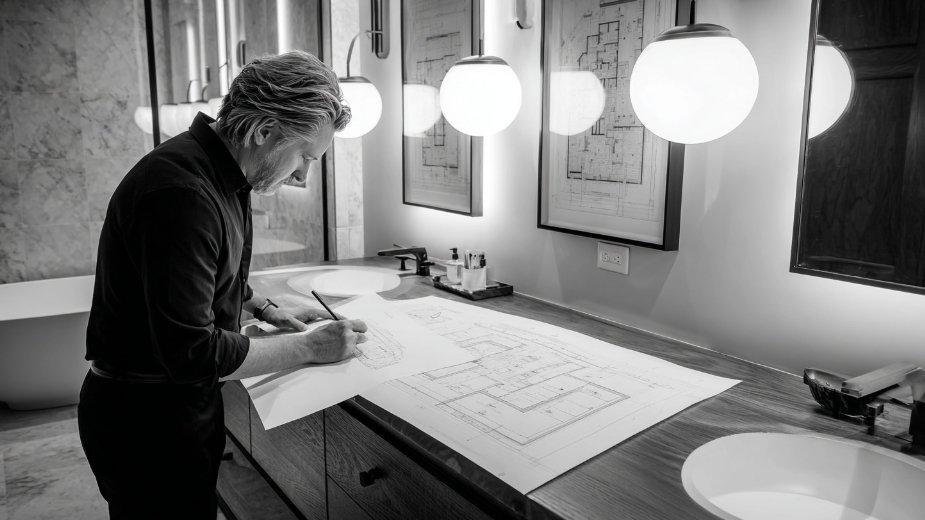
A bathroom may be one of the smallest rooms in a home, yet it sees constant use. According to the National Kitchen & Bath Association, bathrooms remain among the most frequently renovated spaces in residential remodeling projects across the United States. Homeowners consistently rank functionality and storage among their top priorities during upgrades.
That focus reflects daily reality. A poorly arranged bathroom can slow routines and create small frustrations that repeat every day. Limited counter space, poorly placed cabinets, or awkward walking paths quickly become noticeable.
As I see it, layout often influences comfort more than decoration. A bathroom with modest finishes can still feel pleasant when everything is easy to reach and logically arranged.
Design professionals often begin with a simple question. How will someone actually move through the space during a typical morning routine? Once that question is answered, many other design decisions fall into place.
The Role of Storage in Creating a Calm, Functional Space
Clutter is one of the biggest factors shaping how a bathroom feels. Toothbrushes, cosmetics, medications, towels, and grooming tools all compete for limited space. Without adequate storage, these items gradually take over counters and shelves.
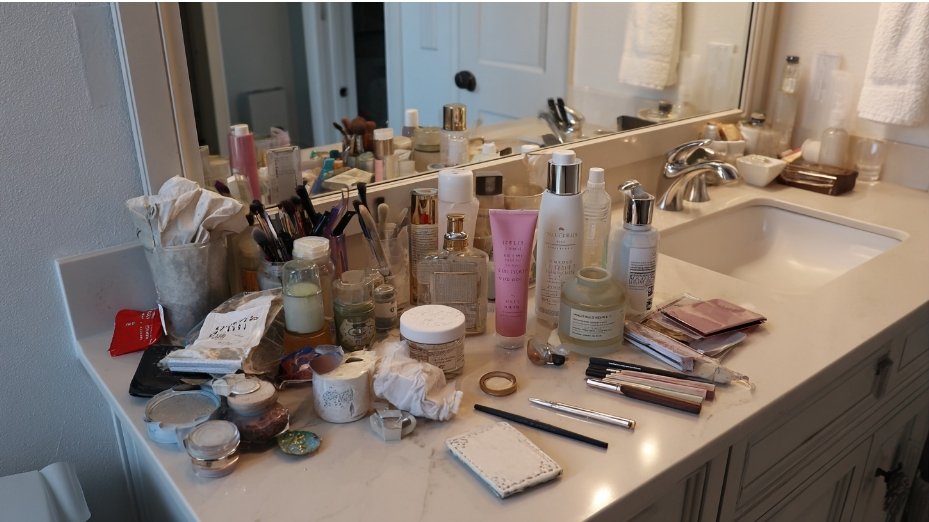
Research from Princeton University’s Neuroscience Institute found that visual clutter can interfere with a person’s ability to focus and process information. While the research focused on work environments, the principle easily applies to home spaces. Too many visible items can make a room feel mentally overwhelming.
Thoughtful storage solves much of this problem. When everyday essentials have a dedicated place, the room becomes easier to maintain and far more relaxing to use.
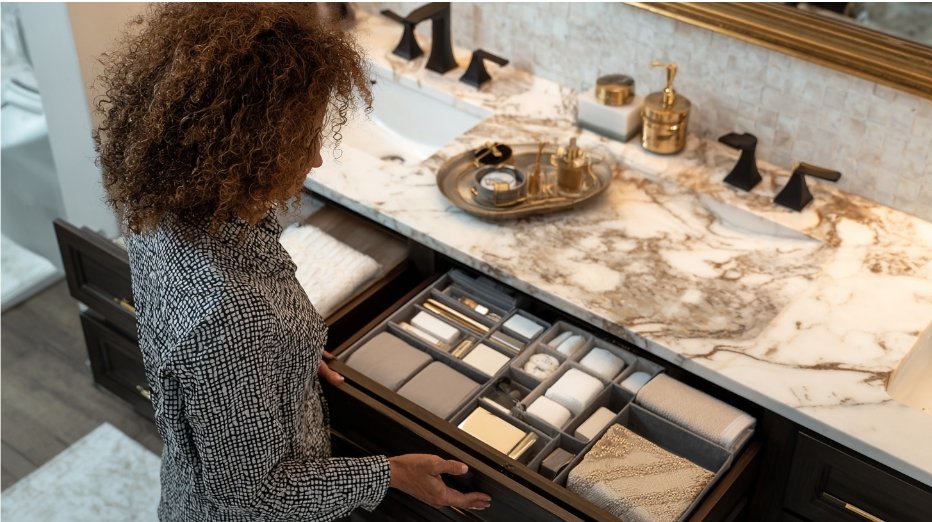
Vanities often serve as the central anchor of this system. They combine sink placement, cabinetry, and counter space into a single functional feature. Designers frequently reference curated collections such as the AURA Modern Home vanity collection when discussing how modern vanities balance storage capacity with minimalist aesthetics.
Well designed vanities do more than conceal clutter. They support everyday habits by keeping essentials accessible while maintaining visual order.
Small Layout Decisions That Improve Everyday Use
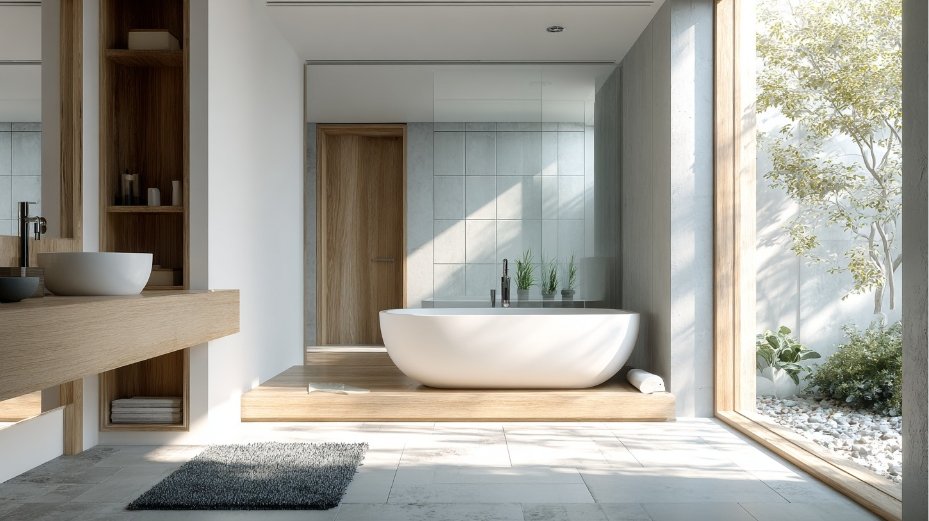
Many improvements that elevate a bathroom involve spacing and positioning rather than expensive materials.
Counter space offers a good example. Even a few additional inches around a sink can make it easier to place grooming tools or toiletries without crowding the area. Without sufficient surface space, a sink area quickly becomes cluttered.
Lighting placement matters as well. The American Lighting Association recommends layered lighting around mirrors to reduce shadows and improve visibility. Side lighting or vertical fixtures near mirrors help distribute light more evenly during grooming tasks.
Traffic flow deserves attention too. When cabinet doors collide with walls or block walkways when opened, the room feels awkward. Careful planning ensures drawers, cabinets, and walking paths work together smoothly.
From my perspective, the most successful layouts feel effortless. Everything works exactly where you expect it to.
Common Bathroom Design Mistakes People Overlook
Even carefully planned renovations sometimes overlook practical details that matter later. Certain mistakes appear again and again in residential bathrooms.
One frequent issue is underestimating storage needs. Many bathrooms include just enough cabinet space for current items but leave little room for future additions. Over time, clutter slowly returns to countertops.
Lighting often becomes another problem. A single overhead fixture rarely provides enough illumination for detailed grooming tasks. Without additional lighting near mirrors, shadows make daily routines more difficult.
Fixture scale can also create issues. Large vanities or oversized sinks may look appealing in showrooms but overwhelm smaller bathrooms once installed. The result is a room that feels crowded despite thoughtful intentions.
Vertical storage is another overlooked opportunity. Walls offer valuable space for shelving or cabinetry, particularly in compact bathrooms where floor space is limited.
I have every reason to think that many of these issues occur when design choices are made without fully considering everyday habits.
A Practical Way to Evaluate Your Bathroom Layout
You do not need professional design training to evaluate a bathroom layout. A simple checklist can reveal whether the space supports daily routines effectively.
Begin by assessing storage accessibility. Can commonly used items be reached easily without searching through several drawers?
Next, consider available counter space. Is there enough room to place daily essentials near the sink without crowding the surface?
Lighting deserves careful review as well. Does the mirror area receive balanced illumination from multiple directions, or does a single overhead fixture create shadows?
Traffic flow provides another helpful test. When cabinet doors or drawers open, do they block movement within the room?
Finally, observe the room’s visual balance. Bathrooms often feel calmer when larger elements such as mirrors, vanities, and cabinets are distributed evenly throughout the space.
Small adjustments discovered through this process can significantly improve how a bathroom functions.
Trade-Offs to Consider When Planning Bathroom Storage
Every design decision involves compromises. Bathroom storage is no exception.
Adding more cabinetry increases organization but also consumes valuable floor space. In smaller bathrooms, oversized cabinets can make the room feel crowded.
Minimalist designs create a different challenge. Clean surfaces and simple fixtures produce a refined aesthetic but may limit available storage.
From my vantage point, the most successful designs find a balance between these extremes. They maintain visual simplicity while still providing enough hidden storage to support daily routines.
Inspiration often comes from brands focused on modern bathroom layouts and thoughtful storage solutions. Examples of contemporary design approaches can be found at https://auramodernhome.com, where modern vanities emphasize clean geometry and functional organization.
Balancing storage, aesthetics, and available space is rarely simple. When these elements align, however, the bathroom becomes far easier to use each day.
Thoughtful layout decisions rarely draw attention to themselves. Instead, they quietly support the routines that happen in the room every morning and every evening.