

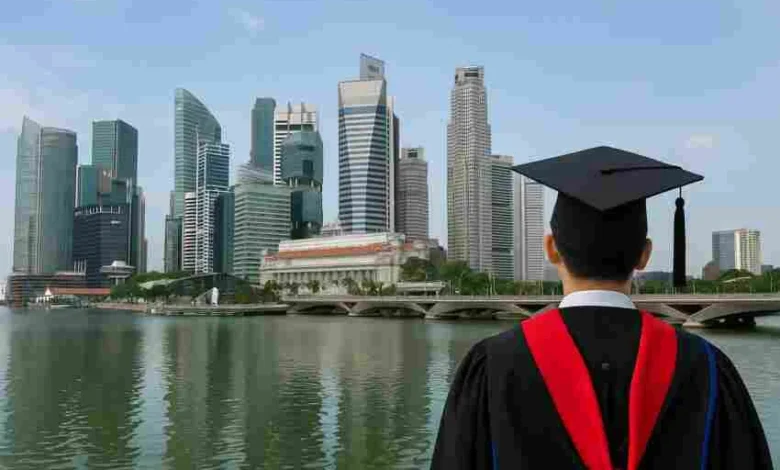
In an increasingly interconnected global economy, selecting the optimal location for pursuing a Master of Business Administration (MBA) degree is a critical decision that can significantly influence one’s professional trajectory. Singapore, a dynamic city-state in Southeast Asia, has established itself as a premier destination for business education. Renowned for its strategic positioning, high-caliber institutions, and vibrant economic landscape, Singapore offers MBA programs that equip graduates with the skills and networks essential for international success. This article explores the key advantages of choosing an MBA in Singapore, highlighting how it fosters global career advancement through a combination of academic excellence, cultural exposure, and practical opportunities.
Strategic Location
Singapore’s geographical position provides a significant advantage for those pursuing an mba in Singapore. Located at the crossroads of Asia, the city-state serves as a vital hub connecting major economies such as China, India, Indonesia, and Australia. This strategic placement offers students unparalleled access to the Asia-Pacific region, which is expected to drive a large share of global economic growth in the coming years.
MBA programs in Singapore frequently include regional case studies, field trips, and partnerships with nearby markets. These elements enable participants to acquire direct insights into varied business landscapes. For professionals looking to advance their international careers, this hands-on exposure creates a distinct competitive advantage, as employers value leaders who can effectively grasp Asian markets and manage cross-border activities.
Quality of Education
The quality of education available in Singapore’s business schools is another compelling reason to consider this destination. Institutions such as the National University of Singapore (NUS) Business School, INSEAD’s Asia campus, and Singapore Management University (SMU) rank among the top globally, frequently appearing in prestigious lists like those from the Financial Times and QS World University Rankings.
These programs are distinguished by their rigorous curricula, which integrate Western management principles with Asian business contexts. Faculty members, many of whom have extensive industry experience and consulting backgrounds with leading corporations, deliver instruction that emphasizes innovation, strategic thinking, and ethical leadership. Accreditation from bodies such as AACSB, EQUIS, and AMBA underscores the programs’ international standards.
While tuition fees typically range from SGD 80,000 to SGD 120,000 for full-time courses, numerous scholarships and financial aid options are available, particularly for international candidates. Graduates often experience significant salary increases, with reports indicating average post-MBA earnings growth of 50% or more, reflecting a strong return on investment.
Cultural Diversity
Cultural diversity within Singapore’s MBA programs further enriches the learning experience and prepares students for global roles. The city’s population comprises a mix of ethnic groups, including Chinese, Malay, Indian, and Eurasian communities, alongside a large expatriate presence.
This multiculturalism is mirrored in the classroom, where cohorts typically include professionals from dozens of countries. Such an environment cultivates cultural intelligence—an essential competency for managing international teams and negotiating in varied settings.
Through group assignments, discussions, and collaborative projects, students learn to appreciate different perspectives and resolve conflicts arising from cultural differences. This skill set is invaluable in today’s multinational corporations, where effective leadership often hinges on the ability to foster inclusive workplaces and adapt to global norms.
Robust Economy
Singapore’s robust economy provides a fertile ground for career development during and after an MBA. As one of the world’s most competitive economies, with a GDP per capita comparable to leading European nations, Singapore hosts over 7,000 multinational companies across sectors like finance, technology, biotechnology, and logistics.
Proximity to these organizations facilitates internships, consulting projects, and employment opportunities. Major firms such as DBS Bank, Google, and Unilever actively recruit from local MBA programs, offering roles that leverage graduates’ newly acquired expertise.
The country’s low unemployment rate for skilled workers, combined with favorable visa policies like the Employment Pass for high-earning professionals, enables seamless transitions into the workforce. Moreover, Singapore’s focus on emerging industries, including sustainable technologies and artificial intelligence, aligns with global trends, positioning MBA holders to contribute to innovative initiatives and advance their careers in high-demand fields.
Networking Opportunities
Networking is a cornerstone of MBA programs in Singapore, amplified by the city’s compact and interconnected business community. Business schools facilitate extensive alumni networks that span more than 100 countries, providing lifelong access to mentors, peers, and industry leaders.
Events such as guest lectures, career fairs, and industry conferences allow students to engage directly with executives from prominent organizations. For instance, initiatives like SMU’s career services and NUS’s global immersion programs connect participants with venture capitalists, policymakers, and entrepreneurs.
This ecosystem not only accelerates job placements but also supports long-term professional growth through ongoing collaborations and referrals.
Innovative Curriculum
The curriculum design in Singapore’s MBA programs emphasizes practical application and forward-thinking content. Courses cover a broad spectrum, from digital transformation and fintech to supply chain management and corporate sustainability, reflecting the region’s economic priorities.
Electives allow customization based on individual career goals, such as entrepreneurship or family business strategies. Many programs include capstone experiences, where students consult for real
companies or develop business plans, bridging theoretical knowledge with tangible outcomes.
Flexibility in formats—full-time, part-time, or executive options—accommodates diverse schedules, ensuring accessibility for working professionals.
High Quality of Life
Beyond academics, Singapore’s high quality of life supports focused study and personal well-being. The city-state is recognized for its safety, efficient public infrastructure, and world-class healthcare system.
English as the primary language of business and education eases integration for international students. While living costs are relatively high, the benefits of a clean environment, diverse culinary options, and recreational amenities contribute to a balanced lifestyle.
This setting allows MBA candidates to concentrate on their studies without the distractions common in less stable locations, ultimately enhancing their overall experience and productivity.
Conclusion
In conclusion, pursuing an MBA in Singapore offers a multifaceted platform for global career growth. Through its strategic location, elite educational institutions, diverse cultural exposure, thriving economy, robust networking opportunities, innovative curricula, and superior quality of life, Singapore equips graduates with the tools to excel on the international stage.
For ambitious professionals seeking to elevate their careers, this destination represents a strategic investment with enduring rewards. Careful consideration of program specifics and alignment with personal goals can maximize these benefits, paving the way for sustained success in a globalized world.