
Strike Chaos: Why Your Flight Was Canceled and Whether You’re Entitled to €600 or Nothing at All

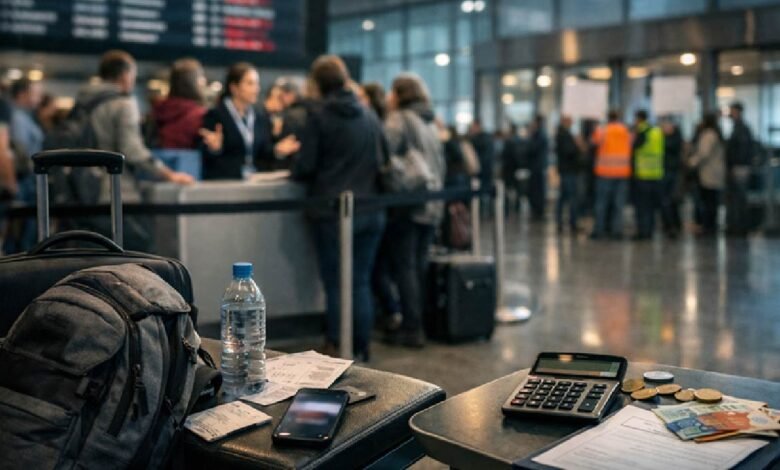
There’s something so maddening about landing at the airport, coffee in hand, only to find that your flight was canceled and no one seems to know why. In recent highlights, airline strikes are now the leading trigger for travel disruption across Europe. Whether it is cabin crew walking off the job, ground staff on strike, or air traffic controllers at each other’s throats, the result for passengers is always the same: missed connections, hotel rooms lying empty, and long hours of confusion in a terminal building. But what many holidaymakers don’t know is that under EU law, they could be due delayed flight compensation or even cancelled flight compensation, potentially as much as €600 per person.
Knowing when you do qualify and when you don’t can be the difference between getting nothing and recouping hundreds of euros.
What European Law Really Says About Flight Delays
EU Regulation 261/2004 is the foundation of passengers’ rights throughout Europe. This applies to all flights leaving from an EU airport, or arriving into the EU on an EU carrier. Under this regulation, delayed or cancelled passengers have the right to assistance and, where applicable, a return flight, plus compensation in certain cases.
EU261 Compensation Amounts
The compensation structure is straightforward.
- Up to €250 for short-haul flights under 1,500 km
- Up to €400 for medium-haul flights between 1,500 and 3,500 km
- Up to €600 for long-haul flights over 3,500 km
These amounts are typically owed when the airline does not inform you that your flight has been canceled at least 14 days in advance, or if your flight lands more than three hours after it was supposed to reach its final destination.
The Strike Question: Act of God or Airline Responsibility?
This is where it gets legally juicy, and where many airlines hope to slither out of paying.
Airlines often rely on the rule that compensation is not owed if the cancellation or delay was caused by an extraordinary circumstance that could not have been avoided even if all reasonable measures had been taken. Bad weather, political unrest, and some security risks would generally be treated this way.
But strikes are different. It depends who is striking.
When Airline Strikes Usually Do Not Excuse Compensation
The European Court of Justice has found in previous cases that a strike by an airline’s own staff, whether pilots, cabin crew, or ground handling workers, does not automatically amount to extraordinary circumstances.
When workers directly employed by the airline strike because of pay or working conditions, that disruption is considered internal to the airline. Under these circumstances, your rights to compensation for a cancelled flight and compensation for delay at an airport remain unaffected, and you may still be eligible to claim cancelled flight compensation.
When Strikes May Count as Extraordinary Circumstances
Strikes by air traffic controllers or airport security personnel are independent third parties over whom an airline has no control. These are more likely to be characterized as extraordinary circumstances.
In those instances, airlines may be excused from having to provide financial compensation, though they are still required to rebook you and provide meals and accommodations as needed.
How Do You Know That Your Claim Is a Good One?
Start by figuring out precisely why your flight was derailed. Airlines have to tell you the reason, but their first explanation is not necessarily valid or thorough. Euphemisms like “operational reasons” or “unforeseen circumstances” are often used to obscure the real cause.
If it was a strike, determine whether it was a labor dispute within the airline, or action by employees of an entity other than the carrier.
Check the Timing and Outcome
Your claim becomes far stronger if either of these are true:
- You were advised of the cancellation with less than 14 days’ notice
- You arrived at your destination more than three hours late
If so, you likely fall within EU 261/2004, and compensation for delayed flights or flight cancellation compensation becomes a realistic option.
Keep Your Evidence
Save all documentation:
- Booking confirmation
- Boarding passes
- Any written communication from the airline
- Receipts for meals or accommodations you had to buy yourself
These will support your compensation claim and any out-of-pocket expenses you need repaid.
Filing Your Claim: On Your Own or Via a Service
Many passengers file directly with the airline first, and that is usually the recommended starting point. Airlines are required by law to acknowledge compensation claims, but response times and willingness to pay vary dramatically.
If no decision has been made in a reasonable time, or your claim has been rejected, you can refer the matter to National Enforcement Bodies or alternative dispute resolution providers.
Alternatively, a professional claim service can take care of everything for you. This typically costs a share of the compensation you receive. It can be a smart route if you are not well-versed in EU passenger rights law, or if the airline has already told you “no” on your first attempt.
Final Thoughts
Strike chaos is a fact of life in modern air travel, but that doesn’t mean passengers should simply absorb the losses. Whether you were affected by flight delays resulting from a labor dispute or stranded by a sudden cancellation, EU law can offer significant protection. With expert guidance from voos, passengers can better understand their rights and take the right steps toward securing compensation.
The key is understanding the true nature of the strike, whether it qualifies as an extraordinary event, and what documentation you need to support your case. With up to €600 per person potentially available, it is almost always worth taking action.
Frequently Asked Questions
Is the strike excuse still applicable if not all staff are striking?
Not necessarily. Even if only part of the strike involves the airline’s own employees, courts have generally held that internal labor disputes remain under the carrier’s control and could leave it liable for compensation.
What if I was arriving into Europe on a non-EU airline?
If you were flying from a non-EU country on a non-EU carrier, EU Regulation 261/2004 does not apply. But you remain covered if you were flying into Europe on a carrier based in the EU.
Can I get compensation for flights disrupted years ago?
You might have between two and six years to file a claim, depending on the country. Statutes of limitation vary by nation, so it is best to consult local rules promptly.
Do I get anything if I am not owed payment?
Yes. Even where extraordinary circumstances apply, if your wait time is long, airlines are obliged to provide duty of care: food, drinks, and accommodation when needed. This duty of care cannot be waived.