

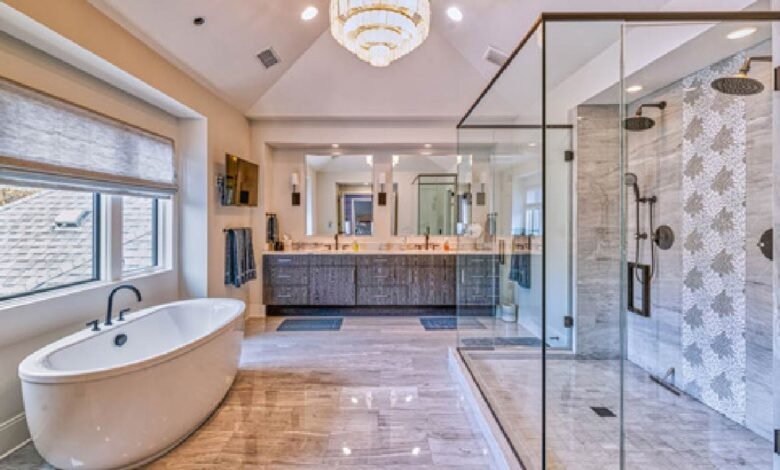
To create a low maintenance bathroom design, focus on streamlined layouts with high performance materials that naturally repel grime and moisture. The core of an easy to clean bathroom design is eliminating physical barriers like grout lines, intricate hardware, and floor mounted obstacles. Large format porcelain tiles, frameless glass enclosures, and wall hung fixtures create a seamless environment that stays hygienic with minimal effort. When sourcing materials, retailers like Mineral Tiles offer a wide selection of tiles online in low maintenance finishes that simplify long term care.
What are the fundamental principles of a low maintenance bathroom design?
A successful low maintenance bathroom design relies on the reduction of “visual and physical noise.” In a standard bathroom, small tiles and complex moldings create hundreds of tiny ledges where dust and mold can settle. To shift toward a more efficient design, you should focus on flat surfaces and continuous lines. Using slab materials or oversized tiles significantly reduces the surface area of grout, which is the most difficult part of a bathroom to keep white and clean. By prioritizing these sleek elements, you ensure the room functions as a self-sustaining, high-end space.
Which materials define a high quality easy to clean bathroom design?
When choosing materials for a low maintenance bathroom design, non-porous options are non-negotiable. Natural stones like marble are beautiful but require frequent sealing and special cleaners to prevent staining. In contrast, engineered quartz and high-density porcelain offer the same aesthetic with none of the chores. Look for “rectified” tiles, which have perfectly straight edges that allow them to be laid closer together. This reduces the footprint of grout and creates a nearly solid, easy to wipe surface that defines modern, efficient bathrooms. If you’re planning a full renovation, a bathroom remodel checklist helps ensure you don’t overlook material choices like these during the planning phase.
How does the shower architecture impact a low maintenance bathroom design?
The shower is the most utilized part of the room and usually requires the most upkeep. A low maintenance shower avoids heavy metal frames and sliding tracks that collect stagnant water. Instead, a walk-in “curbless” design allows the bathroom floor to flow directly into the shower area. This layout is a hallmark of an easy to clean bathroom design because it allows for rapid cleaning of the entire floor in one pass. For the walls, large format shower wall tiles with a polished finish ensure water beads off instantly, preventing the buildup of calcium and soap deposits that dull the look of the room.
Why is fixture selection critical for a clean bathroom design?
The fixtures you choose act as the “touchpoints” of the room. In an easy to clean bathroom design, wall-mounted faucets and toilets are preferred over deck-mounted versions. When a faucet is mounted to the wall, water does not pool at the base of the handle, which prevents the orange “rust rings” and mineral crust often seen on standard sinks. Similarly, a wall-hung toilet allows for a completely clear floor, making it impossible for hair and dust to hide in hard-to-reach corners. These design choices don’t just look sophisticated; they are mechanically designed to stay cleaner for longer periods.
How do you balance aesthetics with a low maintenance bathroom design?
You do not have to sacrifice style for functionality. A low maintenance bathroom design actually aligns perfectly with the popular “minimalist luxury” trend. By choosing a unified color palette, you create a space that feels expansive and calm. Materials like wood look porcelain tiles or concrete-style slabs add warmth without the porous vulnerabilities of real wood or stone. Mineral Tiles (one of America’s top-selling tile brands) carries a wide range of these low maintenance options. This design approach focuses on the long-term beauty of the home, ensuring that the bathroom remains a highlight of the property’s value rather than a source of constant household labor.
Conclusion
Building a low maintenance bathroom design is a strategic investment in your lifestyle and your home’s future. By centering your renovation on large format materials, wall-mounted fixtures, and a curbless shower layout, you solve the problem of cleaning before it even begins. An easy to clean bathroom design is not just about the final wipe down; it is about choosing an architecture that stays pristine by design.
FAQs
What is the most durable material for a low maintenance bathroom design?
Porcelain is the most durable and easy to maintain material. It is harder than granite and completely waterproof, meaning it will not stain or wear down even with heavy daily use.
How does a walk in shower help with easy to clean bathroom design?
By removing the door and the curb, you eliminate the tracks and seals that usually grow mold. It also provides better airflow, which helps the shower dry faster after use.
What is the best color for a low maintenance bathroom design?
Neutral mid-tones like soft grey or sand are best. They do not show water spots as clearly as pure black or pure white, keeping the room looking “guest-ready” for longer.
Does a low maintenance bathroom design increase home value?
Yes. Modern buyers look for “low-effort” luxury. A bathroom that is built with high-end, easy to clean materials like quartz and porcelain is a significant selling point in the 2026 market.
Should I avoid all small tiles in a low maintenance bathroom design?
While large tiles are better for walls and main floors, you can use small tiles on the shower floor for slip resistance. Just ensure you use epoxy grout to keep those smaller lines from staining.
Is a wall-mounted vanity better for a clean bathroom design?
Absolutely. It removes the legs and base of the cabinet from the floor, allowing you to clean the entire bathroom footprint without moving around heavy furniture.