

What Is Special About Murano Glass Vases
If you choose to buy a Murano glass vase, you are not only purchasing a decorative item, but are getting a piece steeped in centuries-old craftsmanship, with techniques passed down through generations.
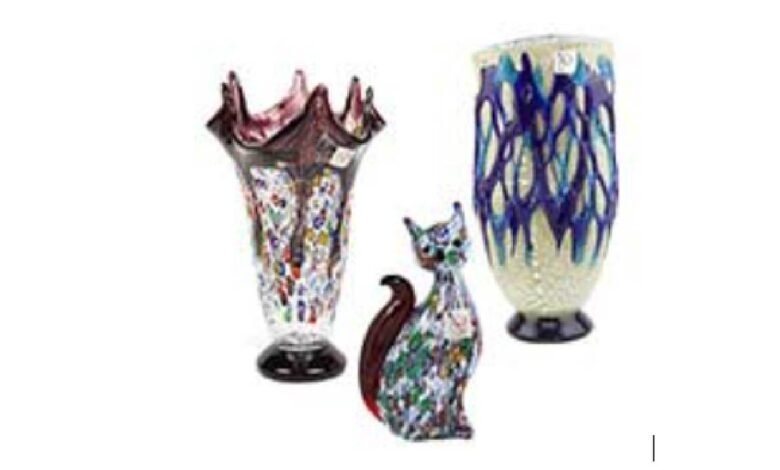
Italian Murano vases are handcrafted by skilled artisans who have trained for years in the art of glass blowing, specifically in Venice. These vases are known for their vivid colors and vibrant patterns. Many look very luxurious thanks to the addition of gold or silver leaf or copper sparkles, or display a unique artistic aesthetic with designs that evoke flowers, folded handkerchiefs, or natural elements like waves or flowing volcanic lava.
These handmade vases can be placed as centerpieces on a dining table, on a console table by a window to catch the light, on an office bookshelf or a hallway table with a bouquet of flowers. They can transform any room in your home into a little corner of Venetian artistry and Italian heritage. However, making sure you pick out a true Murano glass vase and not a fake is of paramount importance. So, how can you determine what is a genuine Murano glass vase?
How to Determine Whether A Murano Vase is Authentic
Look for Official Labels or Signatures
The most reliable way of determining that a glass vase has been produced by a Murano glass artisan is to look for the Vetro Artistico Murano trademark on the piece. However, not all Murano glass producers use this, as Vetro Artistico Murano is a Consortium with voluntary membership and high member fees. Many Murano-based masters and companies choose instead to use their own labels or engrave their signatures or brands onto each piece.
The Vetro Artistico Murano trademark was created in 1994 to certify that Murano glass products are authentic. The pieces have a tamper-proof sticker, which will break into pieces if someone tries to remove it. The sticker has a QR code, which you can check online or via an app to see if it is authentic and find out who produced it.
The labels are in two colors. Vases, as well as lighting, sculptures, and tableware, are red, while jewelry and mirrors have a blue label. Both have the words, ‘Vetro Artistisco Murano’ printed in gold.
Pieces that don’t have the Vetro Artistico Murano label may have the label of the company or the signature of the master, or may not have any signs of the authorship at all, in which case you will need to dig deeper. Read on to see just how to do that.
Check for Traditional Techniques
Murano glass vases are created by glassblowing and using ancient techniques. When determining if a glass vase has been produced in Murano, examine the vases to see if any of these techniques have been used. They are difficult to replicate when mass-produced.
Sommerso
The Sommerso technique was first developed by Antonio Dmda Ros in the 1930s, but was later perfected by the acclaimed artisan Paolo Venini. It was made famous by Seguso d’Arte in the 1950s.
The Sommerso technique involves submerging layers of different colored molten glass within each other to produce unmixed layers of color. It gives depth and a jewel-like effect to a vase.
Filigrana
The Filigrana technique, developed in the 16th century, creates lace-like patterns inside clear glass by embedding thin, colored, or milk-white glass rods within the clear glass. After the rods have been prepared, they are arranged on a metal plate next to each other, heated until they fuse, and then gathered on a blowpipe. Subsequently, they are rolled, stretched, or twisted to create patterns and then shaped into a vase.
Reticello is a form of Filigrana in which two layers of Filigrana rods are crossed. This creates a net-like pattern with tiny air bubbles at each intersection. Zanfirico is another type of Filigrana where the rods are twisted into a spiral pattern.
Millefiori
Millefiori means ‘a thousand flowers’ in Italian, and vases created with this technique generally have mosaic-like flower patterns. The process of crafting these glass mosaics is long and complicated, but it produces beautiful vases. Molten glass of different colors is layered around a core and then cut up into cylindrical beads called murrine. They are arranged in a pattern in a mold and heated until the pieces fuse. The glass can then be shaped into a vase. In real Italian millefiori, pieces are fused without melting and flowing into each other. They create a sort of quilt-like impression, with each tiny Murrina piece featuring a distinct pattern.
Bullicante
The Bullicante technique, developed by Archimede Seguso in the 1930s, is often used to make vases. It involves creating air bubbles within the glass. To do this, molten glass is rolled over a spiked metal mold, creating indentations. This glass is covered with another layer of glass, trapping air bubbles. This can be repeated several times, creating layers of bubbles. The glass is then blown and shaped into a vase.
Gold/Silver Leaf
To make Murano glass vases even more luxurious, gold or silver leaf can be added to the molten glass. Generally, 24k or .925 silver is used. The artisan will roll a gather of molten glass over the sheets of metal and then blow and shape the glass into a vase. This creates a sparkling effect or sometimes, a web-like design. Gold creates warmth and rich hues, while silver gives a cooler and more delicate tone.
Assess the Quality and Craftsmanship
Another way to determine if a vase has been made in Murano is to consider the quality of the piece. An authentic Murano glass vase will generally be heavier than a fake piece. The colors are often vibrant, and there could be gold or silver leaf embedded in the glass.
Because the glass is handmade, Murano glass may have slight imperfections, whereas machine-produced glass is uniform. You may find slight differences in shapes or designs and minor color differences.
Look at the base of a Murano Glass vase. Here you should find the pontil mark, a slightly rough spot which is where the artisan detached the blowpipe.
Does the Cost Make Sense? Is the Seller Reputable?
Because Murano glass vases are handmade, taking hours and sometimes days to make, they are not cheap. If you find an inexpensive vase advertised as being created in Murano, it should definitely raise doubts. Murano Glass is a difficult mix of art and craftsmanship that takes the master years to learn, there are few of these masters left, and the work conditions are tough, all factors contributing to a high price tag. While occasionally, it is possible to find a real Murano vase at a flea market or pawn shop where the seller doesn’t realize what they have, more often than not, a cheap Murano vase is a sign that it was not made on Murano Island.
Obviously, the best place to buy a true Murano glass vase is on Murano Island itself. This is the place where you can find trustworthy sellers. However, if this is not possible, research the seller online. They should provide detailed information about how they sourced their products and the artists they work with. It is also a good idea to check customer reviews to see if they have been positive. In addition, a reputable seller will provide you with a certificate of authenticity for each product.
Red Flags for Fake Murano Glass
There are many red flags to look out for when purchasing a Murano glass vase. If the seller does not know anything about Murano Glass or the masters who make their vases, that is one red flag. If they cannot produce a certificate of authenticity, beware. If the vase is labeled as “Venetian style”, “Murano style”, or “Made in the manner of the masters of Murano”, it is not a genuine vase.
If you are in a store and every piece looks the same, chances are that they are not authentic. If they feel machine-made, too perfectly shaped or polished, this is again a red flag, as is a flawless appearance. The genuine article may have slight imperfections. Fakes often won’t have the vibrant colour range of a real Venetian vase and may look dull. Finally, fakes are likely to look cheap and be cheap.
Differences Between Murano Glass And Crystal Vases
Murano glass vases and lead glass or crystal vases are both considered to be high-end, but there are many differences between them, including how they are produced, the materials used, their weight, and their artistic style.
Material
Murano glass is made from lead-free silica-based soda-lime glass, while crystal is produced using lead oxide. In many countries, a product must contain at least 24% lead oxide to legally be called lead crystal. Some companies now create lead-free crystal because of the detrimental health effects of lead. They use zinc or potassium instead, and these produce similar effects, such as the brilliant sparkle of lead crystal and its ability to refract light.
Weight and Sound
Murano glass vases tend to be lighter than crystal because of the lead content in the latter. However, Murano glass is workable for longer while hot because it isn’t as heavy.
There are also differences in the sound Murano glass and crystal make. Murano glass produces a dull, short sound if you tap it, while lead crystal gives a long, musical tone, similar to a bell ringing.
Clarity and Sparkle
Murano Glass vases are generally a canvas for color. They are often richly colored with intricate designs. Crystal vases, on the other hand, are usually transparent and they sparkle. Lead increases the ability of the glass to refract and bend light. This can create a rainbow effect.
The Production
Murano glass vases are handmade by skilled artisans using a variety of techniques. Crystal vases are often molded or cut with machinery, but high-end pieces may be hand-cut.
Imperfections
Because Murano glass is always made by hand, there may be small imperfections such as the pontil mark, small unintentional air bubbles, and slight asymmetries in shape. Lead crystal, on the other hand, is often cut and polished by machines, so it is perfect.
Companies That Produce Crystal Glasses
There are a number of high-end crystal producers in France, including Baccarat, Lalique, and Daum. Daum is one of the very few companies to use the pate de verre technique, in which crystal fragments are packed into a mold and fired in a kiln for several days. This creates strong colors and a detailed texture.
Other companies producing crystal glass include Orrefors in Sweden and Nachtmann in Germany. Moser in the Czech Republic produces lead-free crystal.
How Murano Glass Vases are Used
In the Home
Focal Point Centerpieces
Murano glass vases often have vibrant colors and unique designs, making them perfect as a central decoration on a dining table, a coffee table, a sideboard, or a bookshelf. All eyes will be drawn to it when they enter the room. Each vase is a unique piece of artwork and brings elegance to any room
Functional Floral Displays
The colors and designs of Murano glass vases complement the natural beauty of both fresh and dried flowers. Place anywhere in the home to brighten up the space.
A Complement to the Design of a Room
Murano Glass vases are often used to complement the color scheme of a room or to introduce bold colors into an otherwise dull room. Place a vase on a bare surface to let the design and colours stand out.
An intricately designed vase, such as one created with the Filigrana technique or Millefiori, will suit traditional or luxurious settings, while vases that are monochrome or modern will fit in a contemporary home.
As a Grouped Collection
To create an interesting and curated look, Murano glass vases can be grouped in small collections on tables or shelves. You can choose a mixture of colors for an eclectic design, or group similar colors and shapes together.
As a Light-Enhancing Display
Murano Glass vases can be placed near windows or under accent lighting. The light will interact with the vase, highlighting and illuminating it.
In An Office
As a Centerpiece in a Reception Area
Large, colorful, and uniquely shaped Murano glass vases can be placed in a reception area to set a sophisticated and high-end atmosphere for visitors. They create a balance between creativity and professionalism.
As a Decoration on a Desk
Murano Glass vases can be used in offices to decorate bookshelves or desks. They add color, depth, and style to an otherwise plain and impersonal space. They show that you have good taste and project the image of sophistication, worldliness, and career success.
As Functional Art
Murano Glass vases don’t just have to be works of art in your workspace. They can also be functional, displaying flowers and so enhancing the atmosphere.
As Decor in a Conference Room
Because of their vivid colors, including deep reds and bright blues, and the use of gold and silver leaf, Murano glass vases have the ability to brighten up a conference room, which can help to boost the morale of the staff.
In Public Spaces
Hotel Decor
Murano vases are often used as hotel decor, both in Italy and in many other countries, especially for high-end hotels. Many vases are vibrantly colored, have gold or silver leaf infusions, or elaborate forms, adding prestige and sophistication to the space. To create a welcoming tone, they are often placed in the entrance halls, at the reception, in restaurants, or as a large centerpiece in gathering places.
Museum and Gallery Exhibits
Both vintage and contemporary Murano vases are exhibited in galleries and museums such as the Murano Glass Museum and the Corning Museum of Glass in New York, showcasing Murano craftsmanship and the techniques used.
Why Consider Adding A Genuine Murano Glass Vase to Your Decor
Murano glass vases transform any room in your home into a display of Italian artistry and heritage. Place them as a focal point on the dining table or by a window to catch the light. However, to ensure that you are purchasing a genuine piece from Murano, be sure to check the vase carefully for signs of hand craftsmanship, use of traditional Murano Glass techniques, presence of stickers, or signatures, or ask qualified experts for their opinion, and then you will be able to hold a piece of Italian history in your hands.