

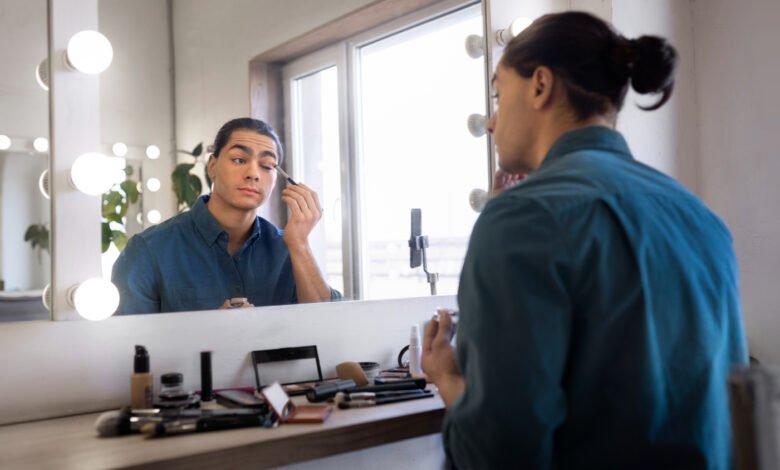
You look in the bathroom mirror after a long day and notice the fine lines seem deeper than they did last month. The thought crosses your mind that maybe you could fix it yourself this weekend, since the internet makes it look simple, and everyone seems to be doing something at home now.
Trends repeat themselves, only dressed in new packaging. The tools change, the marketing shifts, but the same quiet question keeps coming up in clinics and living rooms alike. Can this be done safely at home, or is that confidence built on wishful thinking?
Why the DIY Temptation Keeps Growing
The move toward at home cosmetic treatments was almost predictable. Clinic visits cost money and time, and not everyone wants to show up at work with a swollen face and a vague explanation. Doing it yourself, guided by a video, feels cheaper and easier. Online demos make peels and microneedling look simple, almost routine. What you do not see is the training behind judging skin depth or preventing infection. At the same time, people now handle everything themselves, from food delivery to health searches, so cosmetic care followed.
The Risks Behind Buying Devices Without Oversight
A lot of the concern starts with access. Professional level devices that were once limited to clinics can now be ordered with a credit card and shipped to your door. People are buying cosmetic devices online. The packaging looks sleek. The instructions look clear. It feels official enough.
What is harder to see is that many of these devices were designed for trained providers who understand skin anatomy and sterilization protocols. The depth of a microneedling pen, for example, is not a random setting. A few tenths of a millimeter can mean the difference between mild redness and scarring. Chemical peels that are labeled as medium strength can cause burns if layered incorrectly. Lasers and light devices can trigger pigmentation changes, especially in darker skin tones, if used at the wrong intensity.
There is also the issue of product authenticity. Not everything sold online meets safety standards. Devices can be outdated, modified, or counterfeit. Without regulation at the point of sale, the burden falls on the buyer to know what is safe. That is not a simple task. The central point is not that all devices are dangerous, but that context and training matter more than most people realize.
Skin Is Not Just a Surface
Skin is not just a thin outer shell. Many cosmetic procedures are meant to reach below the surface. Microneedling creates tiny injuries to trigger collagen. Strong peels and acids can pass through the top layer and affect the dermis. When that barrier is disturbed, bacteria slip in more easily. At home, early infection can be brushed off as normal redness or swelling, and treatment is delayed. Scarring can appear weeks later as dark patches or uneven texture. Sometimes the small flaw someone tried to fix is replaced by a mark that lasts much longer.
The Illusion of Medical Grade
“Medical grade” shows up everywhere online, and it sounds official, almost clinical. In reality, the term often has no clear legal standard and can be used quite freely. What makes something truly medical is not just strength, but the training and oversight behind it. In clinics, devices are maintained, cleaned, and monitored under strict rules, and staff are taught to catch problems early. That structure does not exist at home. Even strong creams layered without guidance can inflame skin over time, leaving it sensitive and harder to manage than before.
When At-Home Treatments Can Be Reasonable
Not every cosmetic action at home is unsafe. Basic skincare, sunscreen, mild exfoliation, and low-strength retinol products can be used responsibly by many people. The key difference is depth and intensity.
Superficial treatments that work on the outermost layer of skin carry a lower risk when used as directed. They may still cause irritation, but the damage is usually temporary. The problem arises when people attempt to replicate clinical procedures that are meant to be performed under supervision.
There is also a difference between maintenance and correction. Maintaining healthy skin with gentle products is realistic at home. Attempting to remove deep wrinkles, treat significant acne scarring, or erase pigmentation with strong devices is another matter. Those goals often require layered treatments and careful adjustment over time.
The Psychology of Control
It would be incomplete to talk about safety without mentioning control. Many people feel more comfortable handling cosmetic issues privately. There is a sense of autonomy in doing it yourself. No appointments, no waiting rooms, no explaining your choices to anyone.
That desire for control is understandable. Cosmetic concerns are personal. They affect confidence at work, in social settings, and even in small daily interactions. But control can become an illusion when complications arise. In those moments, professional help is usually needed, and the situation can feel more stressful than if guidance had been sought earlier.
There is also the subtle pressure of comparison. When coworkers quietly show up with smoother skin or fewer lines, it can create a quiet competition. People rarely admit to treatments openly. The result is a guessing game, and some choose the fastest path they can manage alone.
Cost Versus Consequence
Cost is often the deciding factor. Professional treatments can be expensive, especially when multiple sessions are required. Doing something at home appears to cut that bill dramatically.
However, the cost of correcting a complication is rarely discussed upfront. Treating scarring, burns, or pigmentation changes can require specialist visits and advanced procedures. Financially and emotionally, it can outweigh the original savings. This does not happen every time, but when it does, it is significant.
There is also the cost of time. Healing from an at-home mistake can mean missed work or social plans. Swelling and visible irritation are hard to hide. In a clinic, downtime is usually explained clearly in advance. At home, expectations are often shaped by optimistic online reviews.
Some light treatments at home can be safe, but the margin is thin. The stronger the tool, the more responsibility shifts to you. Clean technique, real knowledge of skin, and knowing when something is wrong all matter. Instructions are not the same as training. Before trying anything serious, it helps to ask a professional if your plan makes sense. Skin remembers mistakes.