

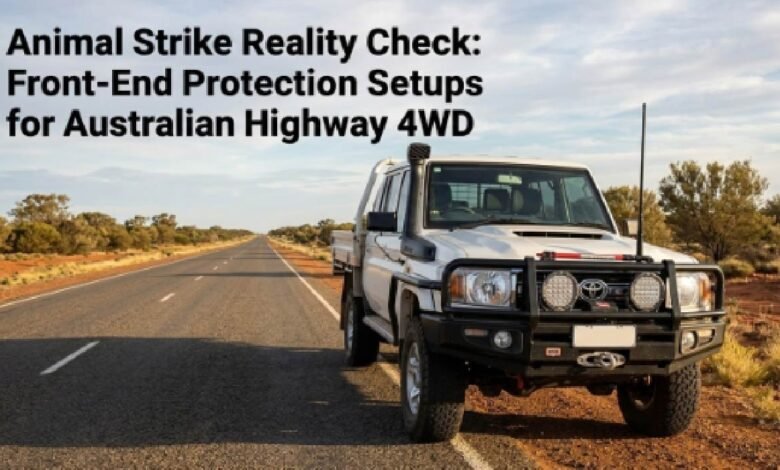
A lot of people only think about a roo strike after they have already copped one. That is usually the expensive way to learn. On Australian highways, especially the long regional stretches where daylight drops fast and fuel stops get thin, a sensible animal strike 4WD protection setup is less about looking tough and more about protecting the bits that keep the vehicle safe, steerable, and drivable the next morning.
That matters because wildlife collisions are not some rare bush yarn. Transport for NSW says more than 100,000 reports of animal roadkill or injury have been recorded in the BioNet database, and NRMA’s wildlife road safety report shows consistent collision hot spots across major NSW and ACT corridors including the Hume, Mitchell, Monaro, New England and Federal highways.
The First Reality Check Is Driver Safety
Before getting into bars, lights, and brackets, the plain truth is this. A protection setup reduces damage. It does not rewrite physics. NRMA’s report notes wildlife is most active at dawn and dusk, animals often move in groups, and for a large animal on the road, swerving can produce a worse outcome than braking in a straight line because the real danger becomes a rollover or hitting a tree.
That is the starting point for highway animal collisions. Drive to conditions. Back off in signed wildlife zones. Treat the first animal as the warning for a second one. Then build the front of the vehicle around survivability, not bravado.
Real Bullbar Benefits Come From Fitment
The real bullbar benefits on country highways are pretty practical. A good setup can help protect the grille, headlights, cooling stack, and front structure from a strike that would otherwise leave the vehicle stranded. It can also give a proper mounting point for accessories that make regional driving easier, provided the bar is designed for that vehicle and fitted properly.
That does not mean every rig needs the biggest lump of steel on the shelf. A daily driven ute doing plenty of blacktop kilometres may suit a cleaner, better-integrated front protection bar.
A touring build that sees remote roads, night driving, and long distances between towns may justify a more substantial full bar. A vehicle where airflow and clearance matter might need a different style again.
The Bullbars is a good example of that spread. It includes lighter Pre Runner options that the site describes as giving maximum clearance and airflow, heavier Raid Series models built around full-length steel bumper protection, and tech-friendly Apex bars with provision for parking sensors, forward-facing cameras, SRS airbag compatibility and winch fitment on supported vehicles.
The Best Animal Strike 4WD Protection Setup Is a System
A lot of buyers treat front-end protection like a one-part decision. Pick a bar, bolt it on, job done. In practice, the better setup is a system.
The first piece is the bar itself. The second is making sure the vehicle’s safety tech still works. The third is keeping recovery gear sensible. The fourth is not loading the nose so heavily that the thing drives like a wheelbarrow full of bricks.
That is why a sensible highway build often looks boring on paper. Correct bullbar. Clean fitment. Recovery points that suit the chassis and bar design. Lighting that improves visibility without turning the front end into a Christmas tree.
In some touring cases, it also makes sense to pair the front bar with Side Protection or Underbody Protection so a glancing hit, road debris, or rough detour does not keep nibbling away at the vehicle.
Legal and Safety Checks Matter A Lot!
This is where plenty of builds go sideways. Not because the bar is weak, but because the wrong bar gets fitted to the wrong vehicle in the wrong way.
Transport Victoria says a bullbar must meet the design requirements of Australian Standard AS 4876.1-2002 for frontal protection systems. It also says the bar must be firmly mounted using the vehicle manufacturer’s attachment points, must not adversely affect the vehicle’s safety systems, and must not exceed the front axle rating when the vehicle is loaded at Gross Vehicle Mass.
That is not just box-ticking. It is the difference between a front protection bar that works with the vehicle and one that creates fresh problems.
There is also the airbag issue. WA Transport’s consumer fact sheet states that bull bars or roo bars may only be fitted to airbag-equipped vehicles if the bar is certified safe for that vehicle, or the aftermarket manufacturer can demonstrate it will not detrimentally affect airbag performance.
WA’s frontal protection system guidance makes the broader point nicely: the aim is to balance occupant protection from animal strike with pedestrian safety, and to make sure the right frontal protection system is fitted to the right vehicle in the right way.
On top of that, Australia’s National Code of Practice for Light Vehicle Construction and Modification, VSB 14, sets minimum requirements for modified light vehicles and needs to be read alongside the administrative rules in the state or territory where the vehicle is registered. In simple terms, the basics are national, but local compliance still matters.
Sensors, Cameras and Daily Drivability Cannot Be an Afterthought
Late-model utes and wagons are full of driver-assist hardware. Parking sensors, radar systems, cameras, airbags, and crash structures all need to keep doing their job after the bar goes on. This is one reason the old-school thinking of “steel is steel” does not cut it anymore.
If the vehicle has front parking sensors or a camera, choose a bar with proper provisions from the start. The relevant Apex products specifically note parking sensor provision, forward-facing camera provision, SRS airbag compatibility, and winch compatibility on supported models. That sort of integration matters for daily use, especially if the vehicle spends half its life in city car parks and the other half on regional roads.
Daily drivability also means being honest about weight. Too much hanging off the nose can affect braking feel, ride quality, tyre wear, and headlight aim. So if a vehicle already carries a canopy, tools, passengers, or towing duties, the bar choice should reflect that. Bigger is not automatically smarter.
Winch Fitment and Recovery Points Need a Bit of Restraint
For some highway tourers, a winch-compatible bar makes perfect sense. For others, it is just extra kilos that spend their life commuting to work.
A smarter way to think about it is this. Fit the winch and recovery gear only if the travel actually justifies it, then make sure the rest of the setup is built around that decision.
On the recovery side, Rated Recovery Points are worth checking because some product listings note they integrate into the winch cradle of compatible Ironman bullbars, which reduces load on the bullbar and transfers it along the chassis instead. That is the sort of detail that matters when things get ugly on a muddy shoulder or washout detour.
The same logic applies to lights. A bar can carry driving lights neatly, but regional highway lighting should help visibility, not encourage overconfidence. If night driving is part of the routine, keep the setup tidy and legal, and let speed stay sensible.
Build It for the Highway, Not the Car Park Chat!
The best animal strike 4WD protection setup is not the flashiest one. It is the one that suits the vehicle, keeps the factory safety systems working, stays within compliance, and still feels civilised on the daily run. That is the setup that earns its keep.
So before buying on looks alone, start with the real checklist. Where does the vehicle actually travel? How much front-end weight can it sensibly carry? Does the chosen bar suit sensors, airbags, and axle limits? Is a winch truly needed. Will the vehicle still drive properly on the other 95 percent of its life.
That is where a trusted Australian 4WD accessories supplier earns attention. Not by pushing the biggest bar in the catalogue, but by helping match the right protection package to the kilometres the vehicle genuinely does.