

Ria Money Transfer, one of the world’s leading money transfer companies, has published a new study analyzing the profound impact of remittances in key recipient countries, including Mexico, India, and Colombia. The report explores how these funds are integrated into the daily budgets of households and the critical role they play in both local economies and times of urgent need.
A key contribution to the national economy
The data reveals that remittances represent a meaningful share of the national economy in these regions. According to 2024 data from the World Bank, remittances account for approximately 3.7% of the national GDP in Mexico, 3.5% in India, and 2.8% in Colombia.
These percentages represent billions of dollars that directly sustain communities and drive economic activity.
Reports from institutions such as the World Bank, the Federal Reserve Bank of Dallas, and CSIS indicate a clear pattern: when families receive remittances, the money is primarily used to cover basic household needs. These funds are consistently directed toward:
- Basic household consumption, including food, essential goods, and routine expenses.
- Health, covering doctor visits, medical treatments, and unexpected health-related costs.
- Education, helping to pay for tuition, school supplies, and continued training.
- Housing, supporting repairs, improvements, and overall living conditions.
These regular transfers provide immediate stability to daily life and strengthen long-term financial security for receiving families. Behind each of those categories is a very specific decision. A parent working abroad cuts back on their expenses so a younger sibling can buy school supplies. A daughter in another country sends a fixed amount each month so her parents don’t have to choose between groceries and the electricity bill. Individually, these transfers are small.
A vital safety net during times of crisis
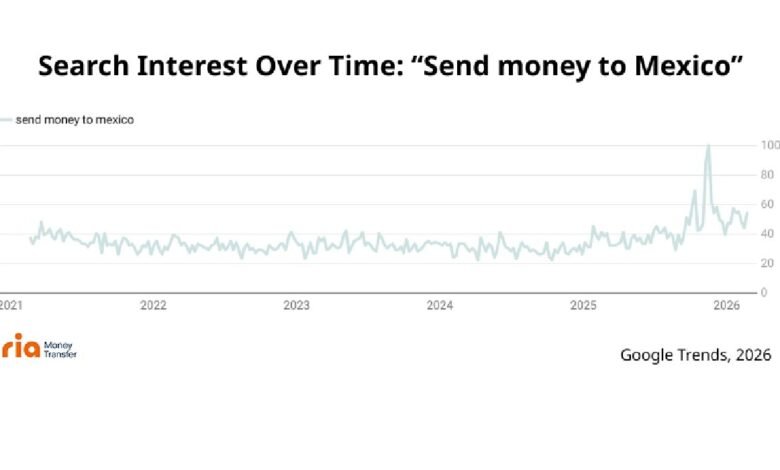
While remittances are primarily used for everyday essentials, the Ria Money Transfer study also highlights how this support intensifies when families face serious disruptions. By analyzing search behavior, the report shows clear spikes in the urgency of sending money linked to climate-related emergencies.
In November 2025, for example, searches for “send money to Mexico” reached their highest level of the year during severe flooding in the country.
A similar pattern appears in other destinations such as India, where interest in sending money increased sharply during the most intense periods of last year’s monsoon season.
In Colombia, increases were also recorded during episodes of flooding and climate-related emergencies throughout 2025.
The data clearly reflects that while family support is ongoing, it becomes a rapid response mechanism when crises directly impact households. Floods, health scares, sudden job losses; when any of these hit, families don’t wait for outside help to arrive. They call someone they trust and sort it out together, across borders and time zones, using whatever transfer service that delivers the money there fastest.
Family assistance that crosses borders
The study underscores that remittances are a steady source of support woven into the lives of millions of households. Behind every transfer is a decision rooted in care and responsibility, helping families stay close and support one another from thousands of miles apart.
This report puts numbers to something that many families already know from experience: sending money home is one of the most direct ways people take care of each other at a distance. The GDP figures are real and significant, but they are based on family decisions, not economics, made one transfer at a time.
Read the full report to discover what the data reveals about the economic weight of money transfers, and understand how these “back-home budget” transfers influence the daily finances and resilience of many international households.