

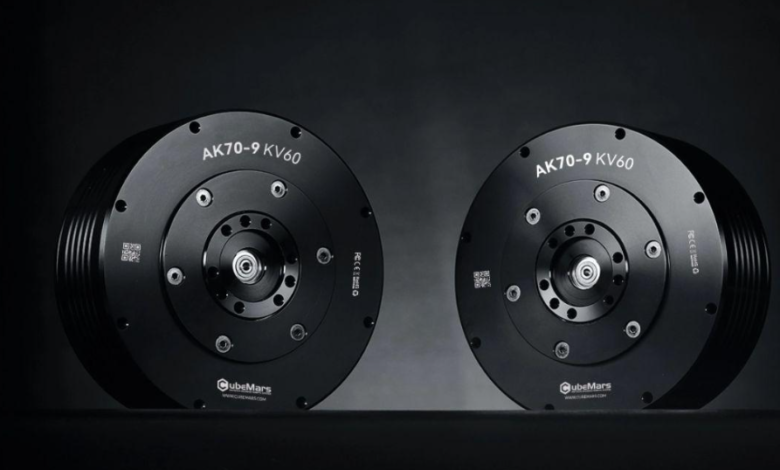
The exoskeleton has advanced rapidly over the last ten years. It has revolutionized sectors such as medicine, manufacturing, the military, and robotics. At the epicenter of this development are the exoskeleton motors that have been the major driving force behind the wearable robotic systems. These motors are used to translate electrical energy into mechanical movement that can be used to increase human mobility, power, and stamina. With the growing need for more efficient, smaller, and smarter wearable robotics, the trend toward developing an Exoskeleton Motor is becoming apparent, shaping the future of exoskeletons.
The Rise of High-Torque and High-Power Density Motors
Among the most noticeable trends in the exoskeleton motor development is the emphasis on high-torque and high-power density motors. Such motors give a larger mechanical performance with no major weight or size additions, which is vital in wearable applications. An exoskeleton can be used to aid in heavy lifting or repetitive work, especially in industrial and military environments, and this is made possible due to the high torque. High-power density is what makes the motors as strong as possible and makes the device light and wearable, which is a consistent problem in the design of exoskeletons: the strength versus the comfort issue.
The makers of wire and cable are maximizing on sophisticated materials, improved winding technologies, and better magnetic architecture to ensure high torque within a small form factor. This is especially true in the case of lower-limb exoskeletons that help a person walk or in the rehabilitation process, where the motors would be required to support the weight of the body and move dynamically without losing stability.
Integration of Intelligent Control Systems
The other important trend is the introduction of smart control systems into the exoskeleton motors. The exoskeletons of the present day are dependent on the strict alignment between the movements of a person and the movement of the engines. High-level control algorithms allow the motors to be responsive to the actions of the user, dynamically changing the torque, speed, and position. The use of advanced sensors, including encoders, gyroscopes, and force sensors, that constantly measure the movement and feed this information to the control system, has facilitated this trend.
Multiple operating modes are also possible using intelligent control systems, including force control of rehabilitation devices and servo control of precision robotics. Exoskeleton motors can offer personalized support depending on the task or needs of the user because they can effortlessly alternate between these modes. The trend is of particular importance in the area of medical rehabilitation applications, where motion control is especially important regarding patient safety and response to treatment.
Customization and Modular Designs
Individualization and the concept of modularity have become important trends in the development of exoskeleton motors. Applications have different motor requirements, including motor torque output, speed range, or control capability. The modular design also enables an engineer to design or choose motors according to the needs of a particular exoskeleton system and, therefore, make it easier to scale the same base technology to different applications.
Specialized motors can be used in industry to offer more torque to help in moving bulky items, and in rehabilitation to give a more focused and delicate movement control. Modular actuator systems can also support fast prototyping and upgrades so that developers can add new motors or sensors without having to redesign the whole exoskeleton.
Enhanced Energy Efficiency and Battery Integration
One important aspect in the development of exoskeleton motors is energy efficiency because wearable robotics depend on mobile sources of power. Better energy efficiency will increase the working hours, and the number of battery recharges will be lessened, thus making exoskeletons more viable in terms of their usage. The manufacturers are producing motors that have been optimized in terms of electromagnetic design, low-friction parts, and sophisticated control algorithms to reduce energy losses.
Also, a trend is the integration of batteries. At least some exoskeleton motors are being designed with high-capacity and lightweight batteries that will operate seamlessly and extend their operating range without affecting performance. The compact and ergonomic wearable designs are also possible because of this integration, when the source of power is optimized along with the motor.
Focus on Durability and Reliability
Rigidity and stability continue to be important contributors to exoskeleton motor design. Exoskeletons can be used in harsh conditions, such as on industrial floors or in military field conditions. Motors have to support repetitive motion, loads of high torque, and be subjected to dust, water, and vibrations. The trends in this area are the use of strong materials, reinforced bearings, and impact-resistant housings that enhance the life of the motors and minimize the maintenance needs.
Engineers are also coming up with fault-tolerant designs that will provide their continuity in the event of partial system failures. This has been of particular significance in healthcare and defense applications, in which the reliability of a device has a direct effect on user safety and effectiveness.
Smart Sensors and Data Integration
Another current trend in the development of exoskeleton motors is the integration of intelligent sensors and data analytics. Motors have sensors that are able to record real-time information on torque, position, speed, and vibration. The information may be utilized to improve performance, anticipate maintenance requirements, and increase user safety. With sensor data analysis, developers have the ability to make motor control algorithms more precise and tune exoskeleton performance to specific user demands.
Predictive maintenance is also facilitated by data-driven motor systems to reduce downtimes and achieve steady performance. This is of particular relevance to the industrial and commercial application of exoskeletons, where it is so important to reduce interruptions to achieve productivity and safety.
Emerging Applications Driving Innovation
Last but not least, the swift evolution of exoskeleton usage is defining the tendencies in motor evolution. In addition to traditional industrial and medical applications, exoskeletons are even being considered for use in sports performance and physical training, and even space exploration. All of these applications pose challenges of their own and demand smaller, smarter, and more versatile motors like never before. The increasing variety of applications continues to drive manufacturers to innovation in motor design, control, and materials.
Conclusion
There is a surge in the evolution of exoskeleton motors, with the need to have them perform better, be more efficient, and have greater adaptability. Major trends are high-torque and high-density power motors, intelligent control systems, miniaturization, modular design, energy-efficient, long-lasting, and smart sensor integration. All of these trends together make exoskeletons accessible to the requirements of a wide range of applications, such as healthcare rehabilitation and industrial support, military work, and the development of robots. With the further development of wearable robotics technology, these tendencies will define the next generation of exoskeleton motors that will provide more powerful, responsive, and flexible human-machine collaboration solutions.
The future of exoskeleton motors is innovation, and more intelligent, lighter, and efficient actuators will increase human potential in industries and applications. Through matching the motor progress with these new trends, engineers and manufacturers can produce wearable robotics that are safe, efficient, and very practical.