

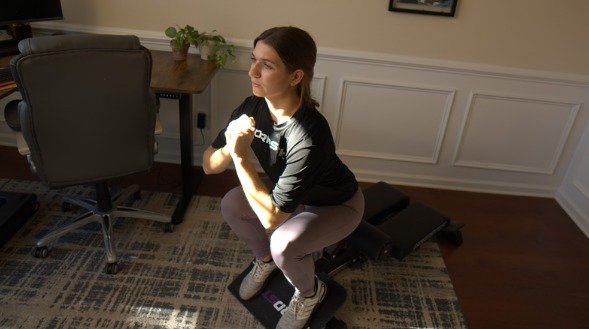
Squats look simple until you try to make them consistent. One rep feels smooth, the next rep shifts forward, the hips shoot back, or depth disappears. Most of that inconsistency comes down to mechanics, not effort. When people ask for squat mechanics explained, they are usually trying to understand why their squat changes under load and what makes a rep feel stable.
Good squat mechanics are not a single cue. They are a set of relationships: foot pressure, knee travel, hip position, torso control, and how the load stays balanced over the midfoot. If one relationship breaks down, the squat still happens, but it becomes less repeatable.
This article explains the key pieces that create stable squat mechanics, what usually goes wrong, and how to fix it without overthinking every rep.
What “Good Mechanics” Actually Means
Mechanics are not about looking perfect. They are about being able to repeat the same movement pattern across sets and weeks. When squat mechanics explained properly, the main idea is balance. A good squat keeps the system balanced so force can travel from the ground to the load efficiently.
In practical terms, good mechanics usually mean:
- The foot stays stable and loaded evenly
- The knees track in line with the toes
- The hips drop between the knees rather than shooting straight back
- The torso stays controlled without collapsing or overextending
- The load stays over the midfoot through the whole rep
Different bodies will squat differently, but these relationships stay relevant across styles.
Foot Pressure: The Foundation You Cannot Skip
Most squats break down at the feet. If the foot collapses, everything above it shifts.
A useful model is the tripod foot:
- Heel
- Base of the big toe
- Base of the little toe
If all three points stay connected, balance is easier to maintain. If the heel lifts or the arch collapses inward, knee tracking becomes inconsistent and depth often feels unstable.
Many lifters fix mechanics faster by improving foot pressure awareness than by adding more cues to the torso or knees. If your first two warm-up sets feel different, check your feet first.
Ankle Dorsiflexion and Knee Travel
Ankles determine how far the knees can travel forward while the heel stays down. Limited dorsiflexion does not prevent squatting, but it changes how the squat has to be organized.
When ankle range is limited, common compensations include:
- Heels getting light near depth
- Hips shifting back early
- Torso leaning forward more than intended
- Depth stopping short because balance feels risky
This is why squat mechanics explained often comes back to ankle motion. Knee travel is not a cue you force. It is a result of available dorsiflexion and how you keep pressure over the midfoot.
Hip Mechanics: Depth Without Pinching
Hips add another layer. Even with good ankles, depth can feel blocked if the hips do not tolerate the bottom position. This is often related to stance width, toe angle, and hip rotation.
A squat usually feels smoother when:
- The knees track where the toes point
- The hips can descend between the knees
- The pelvis stays controlled instead of tucking aggressively or over-arching
If the bottom position feels pinchy, it is often a stance fit issue rather than a “tight hip” issue. Small adjustments can change the path enough to remove the pinch without any stretching.
Torso Control and Bracing
Bracing is not about being rigid. It is about keeping the rib cage and pelvis connected so force can transfer through the trunk.
When bracing breaks down, you often see:
- The chest dropping as you descend
- The ribs flaring and the lower back overextending
- The pelvis shifting and the bar drifting forward
A simple approach is to brace as if you are preparing for contact, keep the ribs stacked over the pelvis, and maintain tension during the descent and ascent. Most lifters lose bracing on the way down, so practicing slower descents can reveal where tension disappears.
This is one of the less exciting parts of squat mechanics explained, but it is often the difference between stable reps and reps that change under load.
Bar Path and Balance Over the Midfoot
For barbell squats, the bar generally wants to stay over the midfoot. If the bar drifts forward, the torso must compensate by leaning more, and the squat can turn into a good-morning pattern.
A common reason for bar drift is a loss of foot pressure or a collapse at the bottom. Another reason is poor timing: the hips shoot up faster than the chest, and the bar path tips forward.
Filming from the side is one of the simplest ways to see if your bar path is consistent. Many lifters feel like they are upright while the video shows the torso folding as depth approaches.
How Heel Elevation Changes Mechanics
Heel elevation shifts the starting ankle position and often makes knee travel easier. That can improve depth and posture for lifters who are limited by ankle dorsiflexion.
A stable angled platform such as a slant board can be used to practice ankle positions and to standardize mobility sessions. For some lifters, it also provides a stable setup for warm-up squats where posture and balance are the focus.
This does not mean heel elevation fixes mechanics permanently. It means it can make certain positions easier to practice so you can build confidence and control.
When a Wedge Setup Helps
Another way to change mechanics is dedicated heel elevation during squat work. A squat wedge provides a consistent heel lift that often helps lifters stay more upright and reach depth with better balance.
A wedge is especially useful when:
- Depth is limited by ankle dorsiflexion
- The torso folds early due to balance shifting back
- Warm-up reps feel unstable at the bottom
The key is to treat it as a training aid. It can support quality reps while you work on mobility and control, but it should not replace those efforts entirely.
Common Mechanical Errors and What They Usually Mean
When people want squat mechanics explained, they often want a quick translation between what they see and what it means.
Here are common issues and typical causes:
Heels lift near depth
Often ankle restriction, loss of midfoot pressure, or rushed descent.
Knees collapse inward
Often foot collapse, stance mismatch, or insufficient hip control.
Hips shoot back early
Often limited ankle dorsiflexion or fear of the bottom position.
Chest drops and the squat turns into a good morning
Often bar drift, lost bracing, or hips rising faster than the torso.
These are patterns, not diagnoses. But they are useful starting points.
How to Improve Mechanics Without Overloading Yourself With Cues
One of the fastest ways to improve is to pick one mechanical focus per session. If you try to fix everything at once, you usually fix nothing.
A simple method:
- Pick one focus, such as midfoot pressure or slow descent
- Film one set to confirm what is happening
- Use a tempo or pause to make the pattern more obvious
- Keep the load moderate while you train the change
This approach improves mechanics without turning every rep into a checklist.
Final Thoughts
Squat mechanics explained well comes down to one principle: repeatable balance. Stable feet, usable ankle motion, a stance that fits your hips, and a torso that stays connected create reps that look and feel consistent. When any piece breaks down, the squat still happens, but it becomes harder to repeat and harder to load safely.
If you focus on foot pressure, control in the bottom position, and a consistent bar path, you will usually see the biggest improvements without chasing complicated cues. Tools like a slant board or a squat wedge can support practice when used intentionally, but the long-term goal is always the same: mechanics you can repeat under real training conditions.